Automatic Litter Box Statistics 2026: Market Growth, Costs & Cat Owner Trends

Automatic litter boxes have moved from niche pet gadgets to one of the fastest growing areas of smart pet care. As more cat owners look for ways to reduce scooping, control odor and manage more then 1 cat homes, demand for self cleaning litter boxes continues to grow.
These automatic litter box statistics for 2026 look at the category from several angles, including self cleaning litter box market growth, smart litter box adoption, ownership costs, cat owner habits and the features driving more buyers toward app connected models.
The category is no longer just about convenience. Newer smart litter boxes can include app alerts, waste drawer reminders, weight tracking, litter level monitoring and multi cat identification. That shift is turning the automatic cat litter box market into a more serious part of the wider pet tech industry.
If you are comparing actual models, our guide to the best automatic litter boxes covers the top options for odor control, cleaning, large cats and multi cat homes.
Automatic Litter Box Statistics: Quick Takeaways
These numbers show why automatic litter boxes and smart self cleaning litter boxes are becoming more important in the pet tech market.
Table of contents
Automatic Litter Box Market Size in 2026
The automatic litter box market is now large enough to be tracked as its own product category. Persistence Market Research estimates the global automatic self cleaning cat litter box market at $768.7 million in 2026, with a projected increase to $1.218 billion by 2033.
That estimate focuses specifically on automatic self-cleaning cat litter boxes. The broader smart cat litter box market, which can include app connected models, monitoring features and advanced sensors, is often estimated even higher. Research and Markets lists the smart cat litter box market at $1.33 billion in 2026, projected to reach $2.11 billion by 2030.
Market estimates vary depending on how each report defines the category. Some reports focus only on automatic cleaning litter boxes, while others include connected smart litter boxes with tracking, health monitoring or app based features. The overall direction is consistent: automatic and smart litter boxes are becoming a more established part of the pet tech market.
| Market estimate | Reported size | Forecast | What it suggests |
|---|---|---|---|
| Automatic self-cleaning cat litter box market | $768.7M in 2026 | $1.218B by 2033 | Self-cleaning litter boxes are moving beyond a niche premium product. |
| Smart cat litter box market | $1.33B in 2026 | $2.11B by 2030 | Connected features and smart monitoring are becoming a bigger part of the category. |
| Automatic self-cleaning cat litter box market | $559.3M in 2024 | $869.6M by 2030 | Another market estimate also points to steady long-term growth. |
Why the Self Cleaning Litter Box Market Is Growing
The automatic litter box market is growing because the product solves a problem cat owners deal with every day. Scooping is repetitive, odor can build quickly, and litter boxes are difficult to keep fresh in apartments, small homes and multi-cat households.
Convenience is the biggest driver. Automatic litter boxes reduce daily scooping by separating waste from clean litter after use. For owners who work long hours, travel occasionally or struggle to keep up with a busy litter area, that can be a meaningful upgrade.
Odor control is another major reason buyers consider the category. Many premium models move waste into a sealed drawer, which helps reduce the smell of exposed clumps in the litter bed. This is especially relevant in homes where the litter box sits in a bathroom, laundry room, hallway, office or other shared space.
Smart home adoption also plays a role. Buyers are already used to app-connected cameras, feeders, locks, thermostats and vacuums. A smart litter box fits into that same pattern: a routine household task becomes automated, monitored and easier to manage from a phone.
Automatic litter boxes are shifting from convenience gadgets to smart pet care tools
Early automatic litter boxes were mainly about reducing scooping. Newer smart litter boxes are increasingly about monitoring, alerts, cat identification and making litter box behavior easier to track over time.
Cat Owner Habits and Litter Box Cleaning Trends
Litter box cleaning is one of the most frequent maintenance tasks in cat ownership. Most expert guidance recommends scooping daily, and some sources recommend scooping once or twice a day depending on the number of cats and litter box setup.
That frequency explains why automatic litter boxes are attractive. A traditional box may need attention every day to stay clean, while a self-cleaning box can reduce the number of times an owner has to manually scoop. It does not remove litter maintenance completely, but it changes the routine.
Multi-cat homes make the problem more obvious. More cats usually means more waste, faster odor buildup and more frequent cleaning. That is why many buyers looking at self-cleaning litter box statistics are not just interested in convenience; they are trying to understand whether automation can make a busy litter setup easier to manage.
For households with more than one cat, our guide to the best automatic litter boxes for multiple cats looks at models that are better suited to heavier daily use.
Automatic Litter Box Cost Statistics
Automatic litter boxes usually cost much more than traditional litter trays. A basic litter box can be very inexpensive, while automatic and smart litter boxes can range from budget self-cleaning models to premium connected systems.
The price difference is one of the main barriers to adoption. Buyers are not only paying for the box itself; they may also need liners, filters, odor packs, replacement parts, compatible litter and occasional accessories such as mats, ramps or steps.
Premium models can still make sense for some owners because they reduce daily scooping and help keep the litter area cleaner. However, the best value depends on how many cats you have, how often you currently scoop, how sensitive you are to odor and whether the app features are genuinely useful to you.
| Type of litter box | Typical cost level | Best for | Main trade-off |
|---|---|---|---|
| Traditional litter box | Lowest | Owners who do not mind manual scooping. | Requires frequent cleaning and offers no automation. |
| Budget automatic litter box | Medium | Owners testing automation without paying premium prices. | May be less refined, less spacious or less reliable long term. |
| Premium self-cleaning litter box | High | Busy homes, odor-sensitive spaces and multi-cat households. | Higher upfront cost and ongoing maintenance supplies. |
| Smart / AI litter box | Highest | Owners who want app alerts, tracking, identification or advanced monitoring. | More features, but also more complexity and higher price. |
If you are comparing a premium model specifically, our Litter Robot 4 review explains how one of the most popular self-cleaning options performs for odor control, cleaning, app features and long-term maintenance.
Smart Litter Box Statistics and Feature Trends
Smart litter box statistics show that the category is expanding beyond basic self-cleaning. Many newer models now include connected features designed to make litter box ownership easier to monitor.
The most common smart features include waste drawer alerts, litter level reminders, cleaning cycle history and app notifications. These features are useful because they reduce guesswork. Instead of checking the box constantly, owners can receive reminders when the drawer is full or litter needs attention.
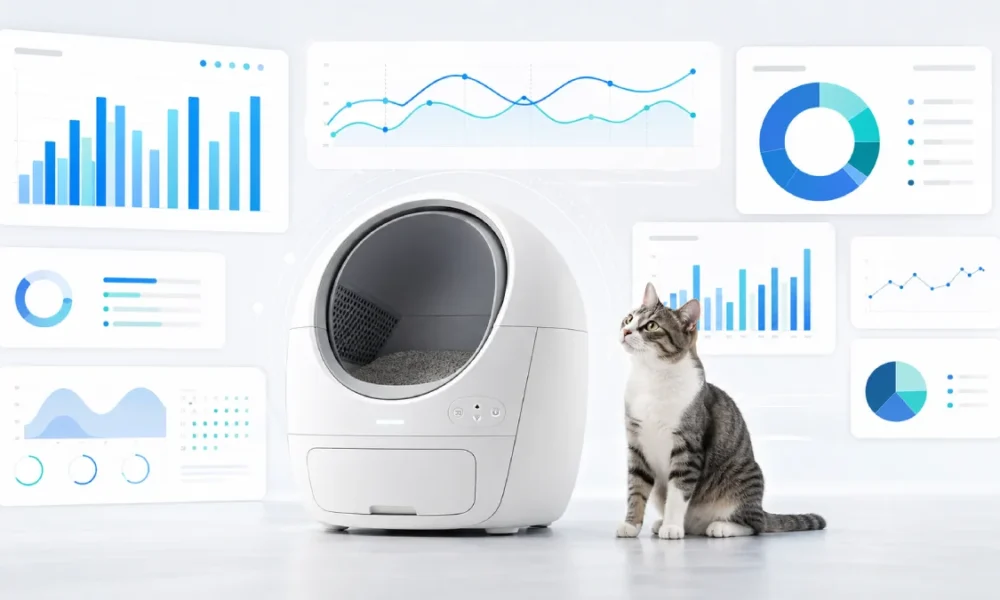
More advanced models are moving toward cat weight tracking, visit history, multi-cat identification and possible health-related insights. These features are especially interesting in multi-cat homes, where it can be harder to know which cat used the litter box and whether one cat’s routine has changed.
| Smart feature | What it does | Why cat owners care |
|---|---|---|
| Waste drawer alerts | Notifies the owner when the drawer is getting full. | Helps prevent odor and overflow problems. |
| Litter level tracking | Shows when litter may need topping up. | Keeps the box working more consistently. |
| Usage history | Tracks how often the box is used. | Can help owners notice changes in bathroom habits. |
| Weight tracking | Estimates cat weight during use. | Useful for trend awareness, especially in multi-cat homes. |
| Multi-cat identification | Attempts to identify which cat used the box. | Makes smart tracking more useful when several cats share one box. |
These features should not be treated as a replacement for veterinary care, but they do show where the smart cat litter box market is heading. The category is becoming less about a single cleaning mechanism and more about connected pet care data.
What Stops Cat Owners From Buying Automatic Litter Boxes?
Despite the growth of the automatic cat litter box market, not every cat owner is ready to buy one. The biggest barrier is usually price. Many buyers are interested in automation, but hesitate when they compare the cost with a simple traditional litter tray.
Cat acceptance is another major concern. Some cats adapt quickly to self-cleaning litter boxes, while others may be nervous around enclosed designs, movement or sound. A slow transition is often necessary, especially for older cats, skittish cats or cats that strongly prefer open trays.
Space can also be a problem. Many premium automatic litter boxes are large, need a power outlet and work best on a firm, level surface. That can make them harder to place in small bathrooms, narrow hallways or compact apartments.
Maintenance expectations matter too. Automatic litter boxes reduce scooping, but they still need emptying, wiping, litter top-ups and occasional deep cleaning. Owners who expect a completely maintenance-free product may be disappointed.
For a more practical breakdown of ownership trade-offs, see our guide on whether self-cleaning litter boxes are worth it.
Future Trends in Automatic and Smart Litter Boxes
The future of automatic litter boxes is likely to be more connected, more data-driven and more focused on cat identification. The basic promise of “less scooping” is still important, but premium models are increasingly competing on app features, tracking accuracy, odor control and multi-cat insights.
One important trend is the move toward health-adjacent monitoring. Litter box behavior can reveal changes in a cat’s routine, such as using the box more or less often than usual. Smart litter boxes are trying to make those patterns easier for owners to notice.
Another trend is the rise of premium accessories and supply ecosystems. Liners, filters, odor packs, litter mats and compatible litter are becoming part of the ownership experience. That means the market is not only about the device itself, but also about the ongoing products that support it.
Litter compatibility will also remain important. Many automatic litter boxes work best with firm-clumping, low-dust litter that sifts cleanly. Our guide to the best litter for automatic litter boxes explains why litter type has such a big impact on performance.
Automatic litter boxes are becoming a bigger part of smart pet care
The strongest automatic litter box trends point toward convenience, odor control, app alerts, cat tracking and multi-cat support. The products are still expensive, but the category is becoming more mature and more competitive.
Sources
These automatic litter box statistics were compiled from market research reports, brand information and pet care guidance sources. Market estimates can vary because different reports define “automatic,” “self-cleaning” and “smart” litter boxes differently.
- Persistence Market Research: Automatic Self-Cleaning Cat Litter Box Market
- Research and Markets: Smart Cat Litter Box Market Report
- Grand View Research: Automatic Self-Cleaning Cat Litter Box Market Report
- Whisker: Litter-Robot 4 Product Information
- TIME: Litter-Robot 4 Best Inventions Coverage
- Petfinder: Litter Box Cleaning Frequency
- Purina: How Often Should You Clean the Litter Box?
FAQ
What are the latest automatic litter box statistics?
Market research estimates suggest the automatic self-cleaning cat litter box market is worth hundreds of millions of dollars globally and could grow into a billion-dollar category over the next several years. Broader smart litter box estimates are even higher because they include connected and sensor-based models.
How big is the self-cleaning litter box market?
Persistence Market Research estimates the global automatic self-cleaning cat litter box market at $768.7 million in 2026, with a projected increase to more than $1.2 billion by 2033.
Are smart litter boxes becoming more popular?
Yes. Smart litter boxes are becoming more popular as buyers look for app alerts, odor control, weight tracking, usage history and easier litter box maintenance. Market reports also project growth for the smart cat litter box category through 2030.
Why are automatic litter boxes so expensive?
Automatic litter boxes cost more because they include motors, sensors, cleaning mechanisms, waste drawers and sometimes app-connected features. Premium models may also include more advanced odor control, tracking and multi-cat monitoring features.
What is driving automatic litter box market growth?
The main drivers are convenience, odor control, multi-cat households, smart home adoption and the desire to reduce daily scooping. Newer smart litter boxes also add tracking features that make the category more appealing to tech-focused cat owners.