Are Automatic Litter Boxes Safe for Cats? What Owners Should Know!

Automatic litter boxes can be safe for many cats, but not every model is equally well designed. The safest options use reliable weight or motion sensors, delayed cleaning cycles, roomy entry areas and cleaning systems that stop when a cat enters or re-enters the box.
The concern is understandable. A self cleaning litter box has moving parts, sensors and automatic cycles, so owners want to know whether it could scare, trap or injure a cat. In most cases, the bigger risks come from poor design, weak sensors, choosing the wrong size for your cat or introducing the box too quickly.
In this guide, we’ll explain how automatic litter box safety works, what features to look for, when to be cautious with kittens, large cats or several cat homes, and how to introduce one safely. If you are still comparing models, you can also see our guide to the best automatic litter boxes.
Most automatic litter boxes are safe for adult cats when they have reliable sensors, delayed cleaning cycles and enough space for the cat to enter and exit comfortably. The bigger safety concern is choosing a poorly designed model, using one with very young kittens, or buying a box that is too small for your cat.
How Automatic Litter Boxes Work
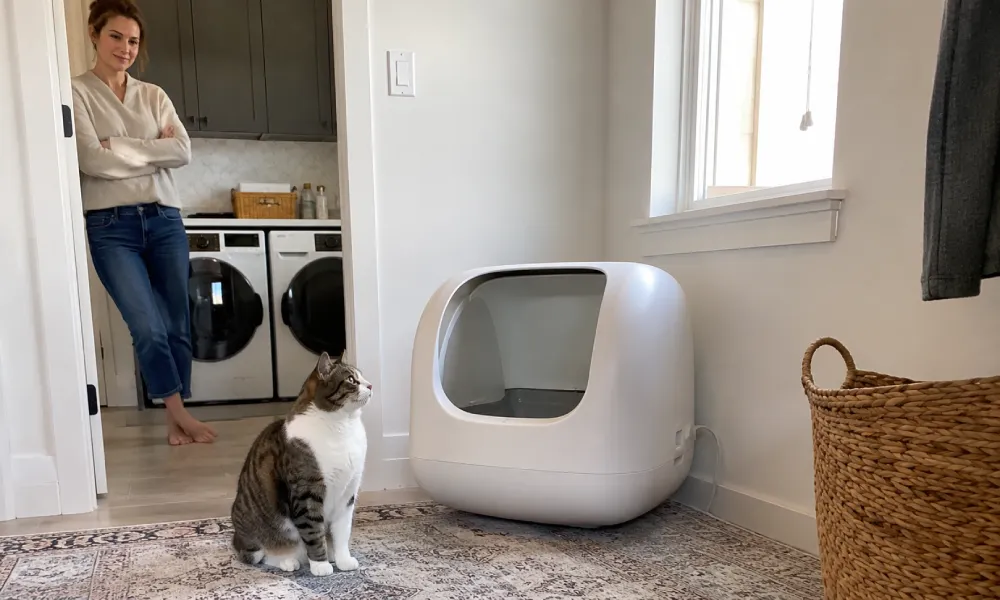
Automatic litter boxes clean waste without daily scooping, but they do this in different ways. Some models rotate a globe or drum to separate clumps from clean litter. Others use a rake to move waste into a covered compartment. Newer smart models may also track usage, detect weight, send app alerts or monitor waste drawer levels.
The safety system matters more than the cleaning style itself. A good automatic litter box should detect when a cat enters, delay the cleaning cycle after use, and stop or reset if the cat comes back before the cycle finishes. This is especially important because cats may investigate the box while it is moving.
For most adult cats, a well-designed model should feel similar to a normal litter box after a short adjustment period. The key is choosing a box with enough interior space, stable entry access and dependable sensors.
Safety Features to Look For
The safest automatic litter boxes are not just the ones with the most smart features. They are the ones that handle cat detection consistently and pause cleaning when needed.
| Safety feature | Why it matters | What to check |
|---|---|---|
| Weight or motion sensors | Detects when your cat enters or returns to the litter box. | Look for models that pause or reset the cycle when a cat is detected. |
| Delayed cleaning cycle | Prevents the box from cleaning immediately after your cat exits. | A delay gives cats time to leave and reduces the chance of startling them. |
| Anti-pinch or obstruction detection | Helps stop the mechanism if something blocks the cleaning path. | Useful for rotating, raking or enclosed designs with moving parts. |
| Roomy entry and interior | Gives cats enough space to turn around and exit comfortably. | Especially important for large cats, senior cats and cautious cats. |
| Stable base | Reduces wobbling and makes the box feel safer to use. | Avoid models that feel lightweight, cramped or unstable. |
Main Safety Risks to Understand
The main risks usually come from poor fit, poor sensor design or poor introduction. A safe automatic litter box can still become a problem if it is too small for your cat, starts cleaning too soon, makes too much noise, or scares your cat during the transition.
The biggest warning signs are litter box avoidance, hesitation near the entry, sudden accidents outside the box, or a cat that runs away whenever the cleaning cycle starts. These signs do not always mean the box is dangerous, but they do mean your cat may not feel comfortable using it yet.
This is why we do not recommend forcing the switch overnight. Keep your cat’s old litter box available at first, let the automatic box stay unplugged or inactive for a short period, and only enable cleaning cycles once your cat is comfortable entering and exiting.
Are Automatic Litter Boxes Safe for Kittens?
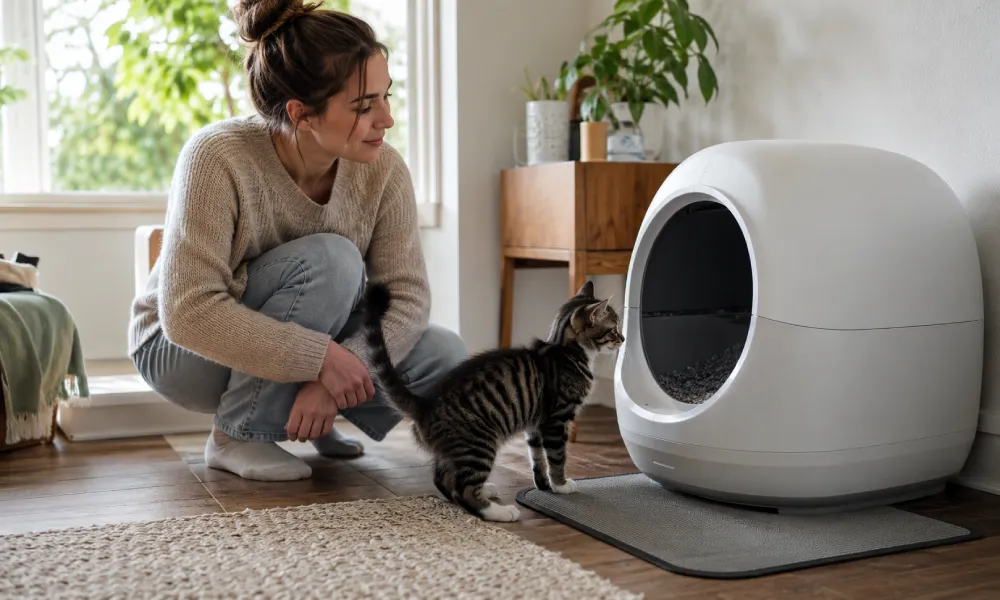
Automatic litter boxes are not always the best choice for very young kittens. Kittens are smaller, lighter, more curious and less predictable than adult cats, so some sensors may not detect them as reliably. They may also climb into the box while it is cycling or become startled by the movement.
For kittens, it is safer to use a normal litter box until they are bigger, heavier and fully litter trained. If you do introduce an automatic model later, keep the cleaning cycle disabled at first and supervise the transition closely.
Always check the manufacturer’s minimum weight guidance before using any self-cleaning litter box with a young cat. If your kitten is below the recommended weight, wait before turning on automatic cleaning.
Are Automatic Litter Boxes Safe for Large Cats?
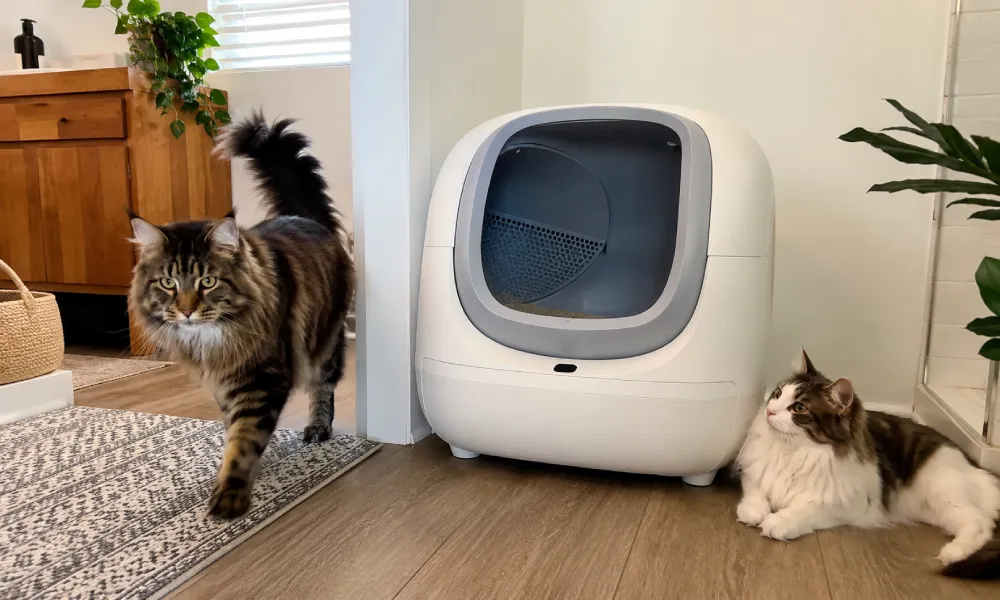
Automatic litter boxes can be safe for large cats, but size matters more than the safety sensors. A large cat needs enough entry space, interior room and turning space to use the box comfortably. If the box feels cramped, the cat may avoid it or step awkwardly during entry and exit.
For bigger breeds, look for a wide entrance, a roomy interior and a stable base. Open-top designs can also be easier for some large cats because they feel less confined than enclosed robot boxes.
If you have a Maine Coon, Ragdoll or another large breed, compare the interior space carefully before buying. We cover this in more detail in our guide to self-cleaning litter boxes for large cats.
Are Automatic Litter Boxes Safe for Multiple Cats?
Automatic litter boxes can work in multi-cat homes, but the setup needs more attention. The main safety issue is not only the cleaning mechanism. It is also whether every cat has comfortable access, enough space and a backup option if one cat blocks or guards the box.
In multi-cat homes, choose a model with strong sensors, reliable cycle pauses and enough waste capacity for frequent use. App tracking can also help because it shows how often the box is being used and whether one cat may be avoiding it.
Even with an automatic model, many homes still need more than one litter area. If you have several cats, our guide to the best automatic litter boxes for multiple cats explains which features matter most.
Which Automatic Litter Box Designs Are Safest?
The safest design depends on your cat, but the best models usually share the same basics: dependable sensors, delayed cleaning, stable construction and enough space for the cat to move naturally.
| Design type | Safety strengths | What to watch |
|---|---|---|
| Open-top automatic boxes | Less enclosed, easier entry and exit, often better for cautious or larger cats. | May offer less odor sealing than enclosed models. |
| Rotating globe models | Can be very effective when sensors and cycle pauses are reliable. | Interior size and entry height matter for large or senior cats. |
| Rake-style boxes | Simple cleaning system and a shape that feels closer to a traditional litter box. | Rake jams, crystal litter acceptance and waste-trap odor can be drawbacks. |
| Very cheap enclosed models | Lower upfront price. | Sensor quality, interior space and build quality may be less dependable. |
For most buyers, the safer choice is not necessarily the cheapest or the most advanced model. It is the one that gives your cat enough space and has a cleaning cycle you can trust. Our full comparison of the best automatic litter boxes is a good place to compare safer overall picks.
How to Introduce an Automatic Litter Box Safely
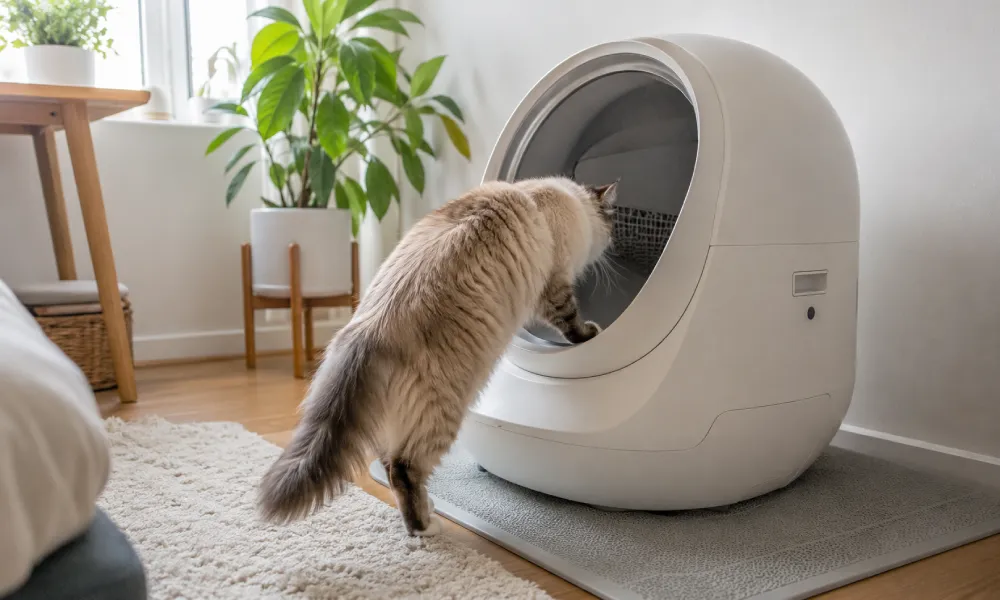
The safest way to introduce an automatic litter box is to make the change slowly. Place the new box near your cat’s existing litter box and let your cat inspect it without pressure. For the first few days, keep the automatic cleaning cycle turned off if the model allows it, so your cat can get used to the shape, entry and litter area before anything moves.
Once your cat has used the box a few times, you can turn on the cleaning cycle while you are nearby. Watch how your cat reacts to the noise and movement. If your cat seems nervous, keep the old box available for longer and give the transition more time.
Do not remove the old litter box immediately. Sudden changes can lead to accidents, especially with cautious cats, senior cats or cats that are already picky about litter box setup.
When to Avoid an Automatic Litter Box
An automatic litter box may not be the right choice if your cat is very young, very nervous, recovering from surgery, struggling with mobility, or already having litter box avoidance issues. In those cases, a simple open litter box may be safer and less stressful until the problem is resolved.
You should also be cautious with very cheap automatic litter boxes that do not clearly explain their safety sensors, cleaning delay or obstruction detection. If the product page does not make the safety system clear, that is a red flag.
For budget buyers, it is better to choose carefully than to buy the cheapest model available. Our guide to cheap self-cleaning litter boxes compares lower-cost options with fewer compromises.
Automatic Litter Box Safety Checklist
Before buying, use this quick checklist to avoid the most common safety and comfort mistakes.
| Check | Why it matters |
|---|---|
| Your cat meets the minimum weight | Very light kittens may not trigger sensors reliably. |
| The entry and interior are large enough | Cramped boxes can make cats avoid the litter area. |
| The cleaning cycle has a delay | This reduces the chance of startling your cat after use. |
| The box pauses when a cat re-enters | Reliable cat detection is one of the most important safety features. |
| You keep the old box during transition | This prevents stress and gives your cat a backup option. |
Final Verdict: Are Automatic Litter Boxes Safe?
Automatic litter boxes are generally safe for many adult cats when the model has reliable sensors, a delayed cleaning cycle, enough interior space and a stable design. The safest models are the ones that stop or reset when a cat enters and give the cat enough room to move naturally.
The biggest risks come from choosing the wrong box for your cat, using one too early with a kitten, buying a poorly designed model, or forcing the transition too quickly. Large cats, senior cats and multi-cat homes need extra attention because size, access and litter box competition matter more.
Our recommendation is simple: choose a well-reviewed model, check the safety features, introduce it slowly and keep a backup litter box until your cat is fully comfortable.