Wildcat Reviews / Reviews & buying guides
The Best Infrared Heaters: Fast, Efficient & Silent Heating

We may earn a commission when you buy through links on this page, at no extra cost to you.
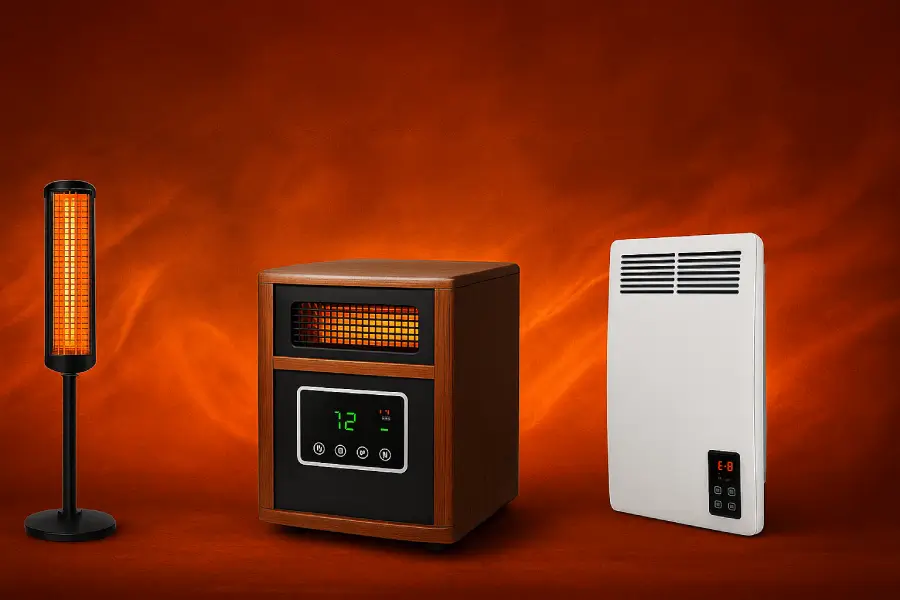
An infrared heater can provide useful supplemental warmth where you sit or work, but the right choice depends on placement as much as wattage. Outdoor radiant heaters, wall-mounted units and cabinet heaters serve different purposes, and some combine infrared elements with a fan. They should not all be described as silent or interchangeable.
This guide compares five main options and a fireplace-style bonus pick, focusing on mounting, controls, intended setting and everyday tradeoffs. We also explain running costs and safe use: infrared branding does not make a 1,500-watt electric heater inherently cheaper per hour than another 1,500-watt heater. Choose for the space you actually occupy, follow the installation instructions and treat portable heaters as supervised supplemental heat.
Quick recommendation
For limited floor space, compare the Heat Storm Phoenix and Wave. For a portable cabinet design, look at Dr Infrared. Choose an outdoor-rated unit specifically for a patio; turn portable heaters off before sleeping.
Top 5 Best Infrared Heaters of 2026
Our five main picks cover cabinet, wall-mounted and outdoor designs, followed by a fireplace-style alternative. These are editorial comparisons of specifications and intended use, not a new set of measured heating or durability tests.

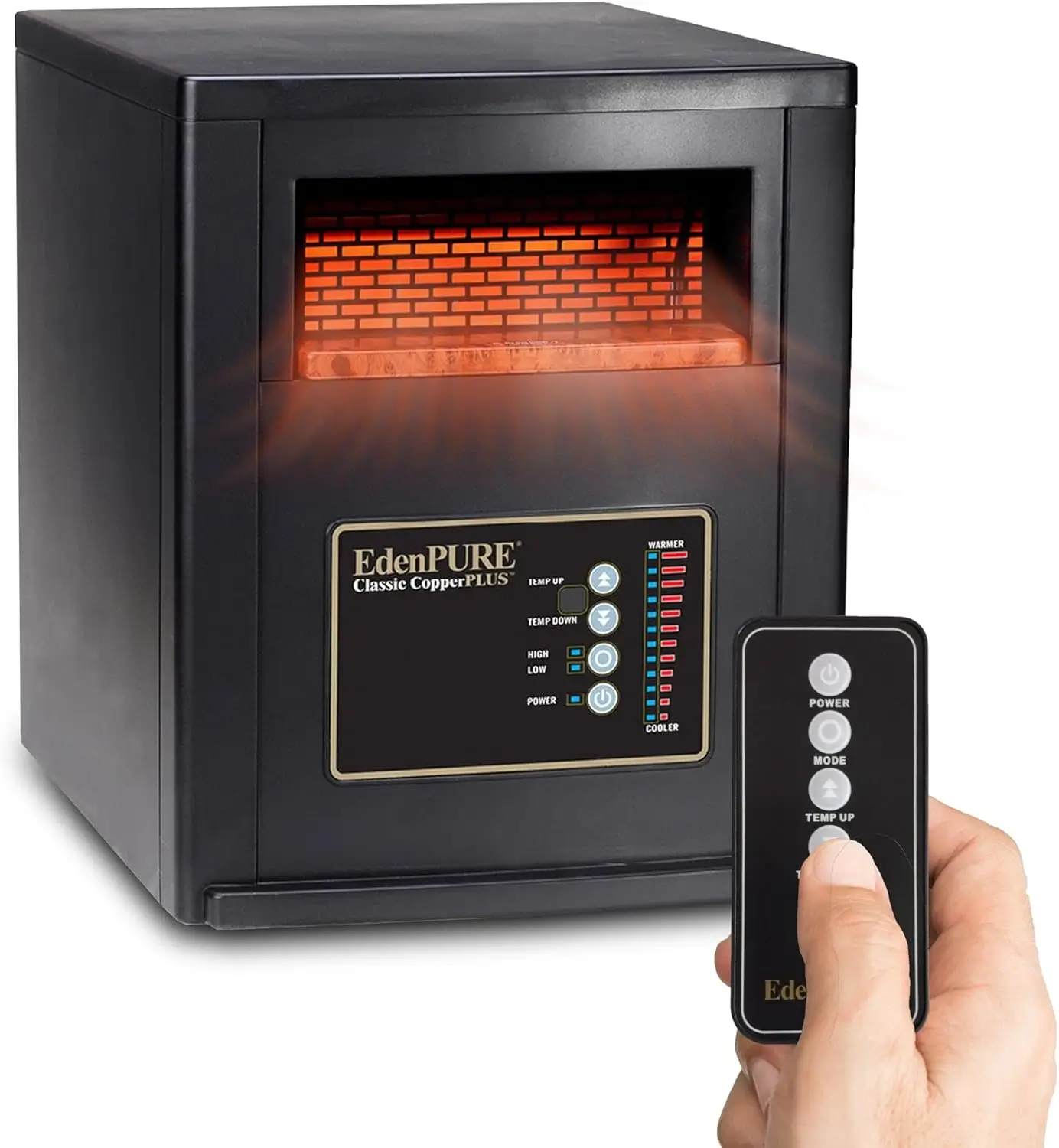
EdenPURE Classic CopperPLUS
Infrared Heater
A cabinet-style 1,500-watt heater with thermostat controls.
- CopperPLUS is a supplemental room-heating option; actual coverage depends on insulation and conditions.
- Check the exact temperature settings, remote and protective features in the current manual.
- A cabinet design needs clear floor space and required separation from furnishings.
- Use while awake and present; switch portable heaters off before sleeping.

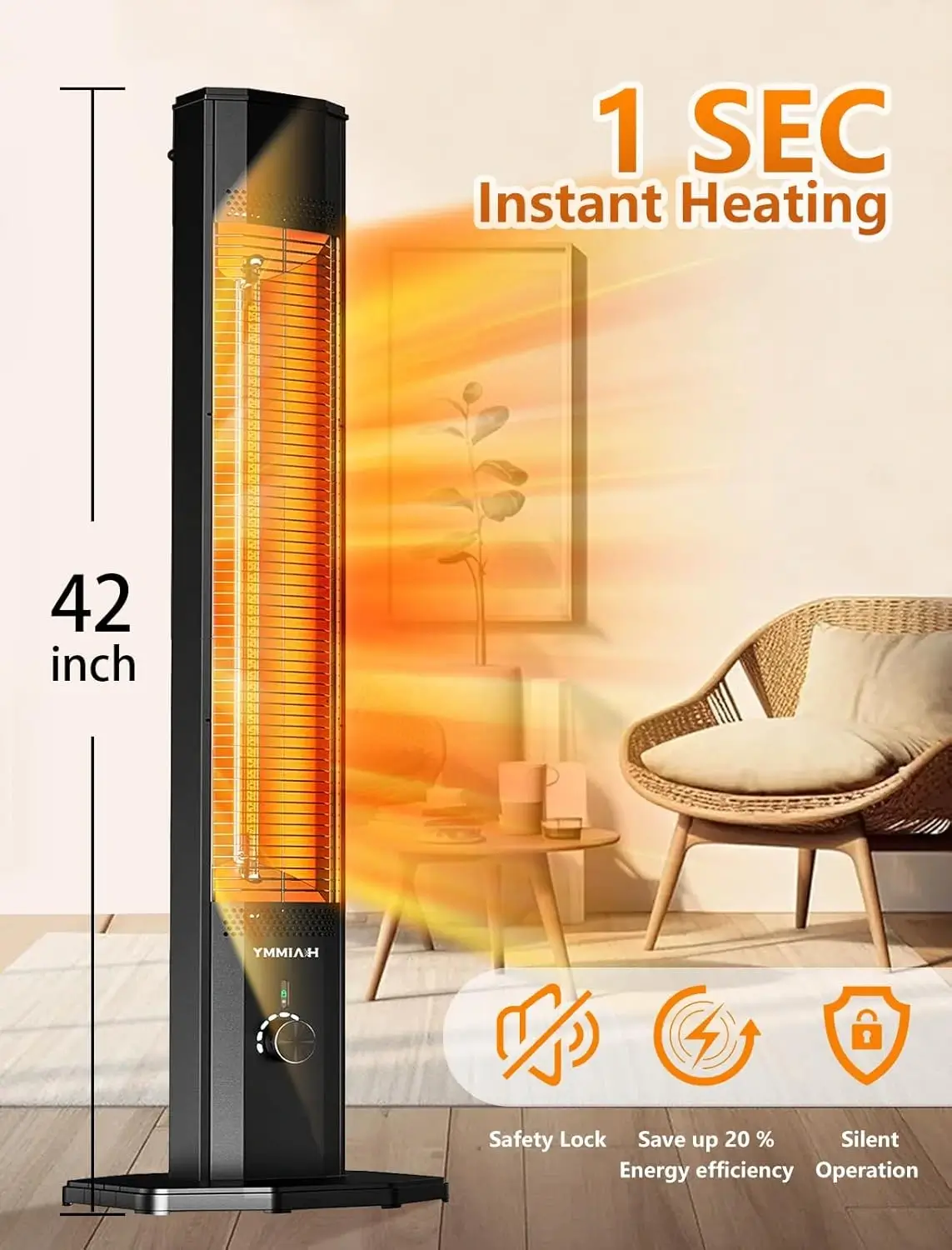
Outdoor Electric Patio Infrared Heater
Direct radiant warmth for an appropriately installed patio position.
- Radiant warmth is most useful within the heater’s line of sight; placement and distance matter.
- Do not assume a generic outdoor description guarantees an IP65 rating or waterproof construction.
- Check wall or stand compatibility, clearances and electrical requirements in the manual.
- Outdoor suitability does not automatically approve indoor or enclosed use.

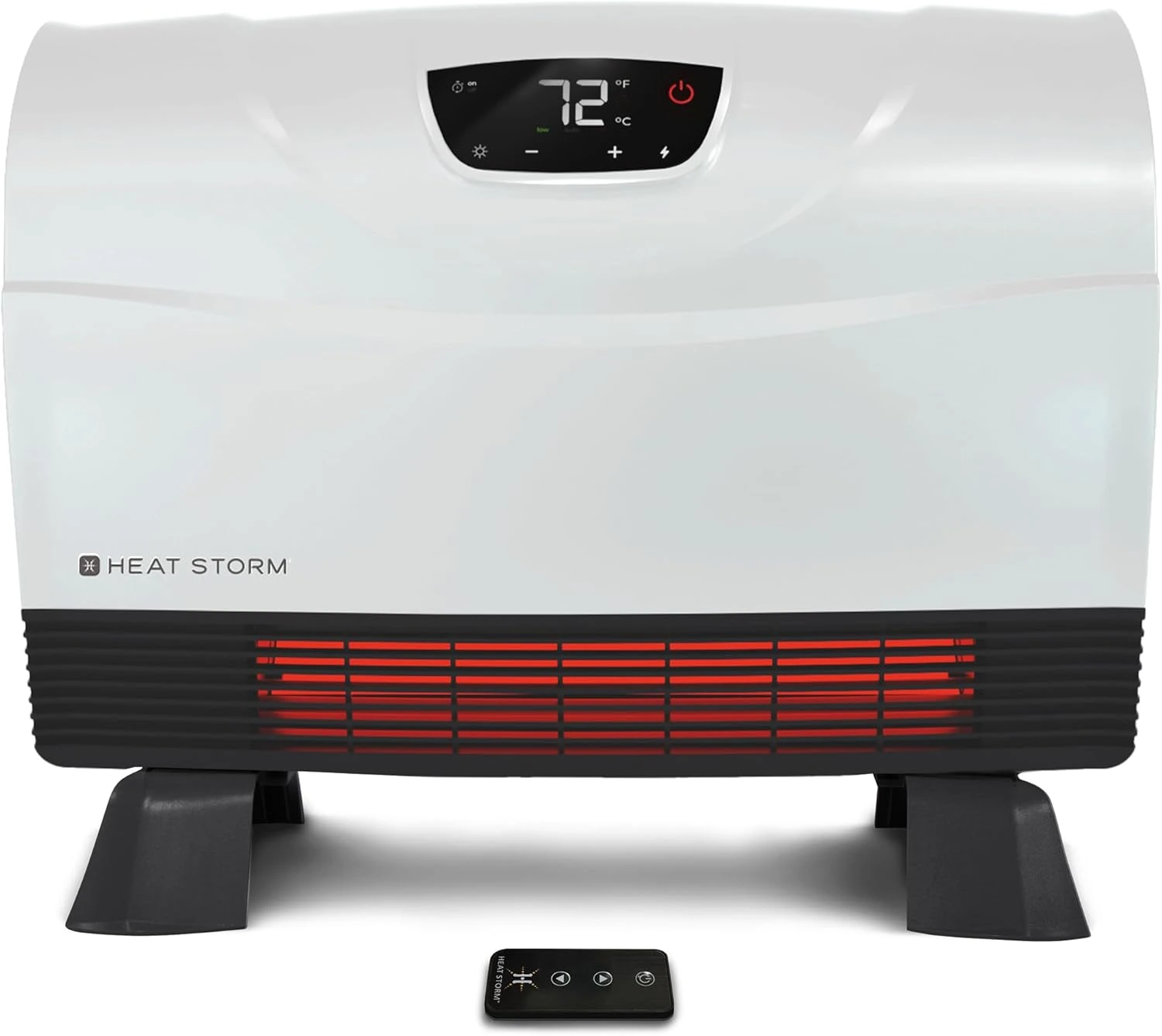
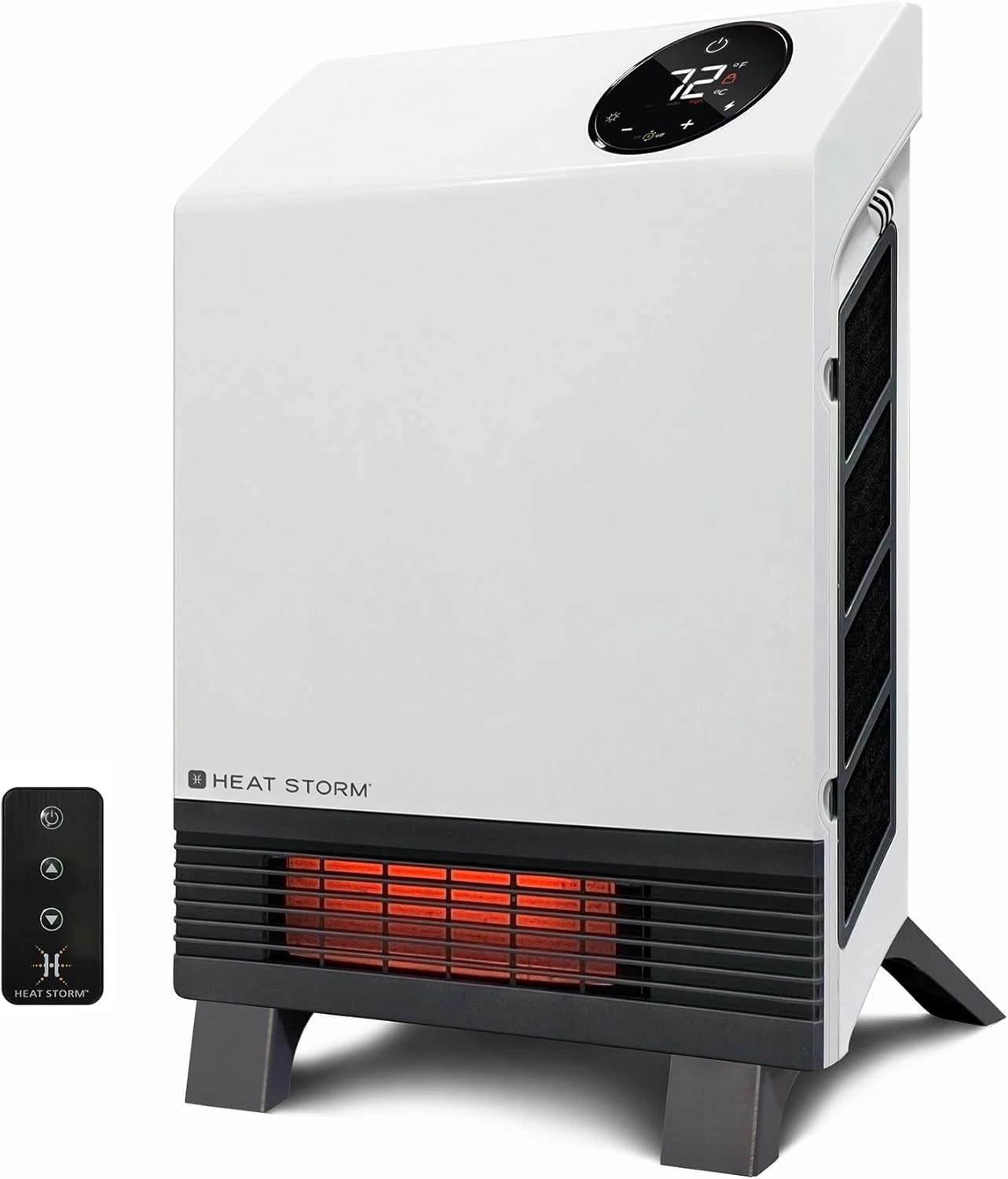
Heat Storm Phoenix Infrared
Space Heater
Wall mounting with 750-watt and 1,500-watt settings on the Phoenix Wi-Fi version.
- Heat Storm’s Phoenix Wi-Fi version adds app control and scheduling; confirm the model suffix before buying.
- The digital thermostat and ECO setting manage output and runtime rather than lowering the cost of each kilowatt-hour.
- Wall mounting frees floor space but still requires the manufacturer’s clearances.
- Allow for fan noise and follow the mounting and electrical instructions.

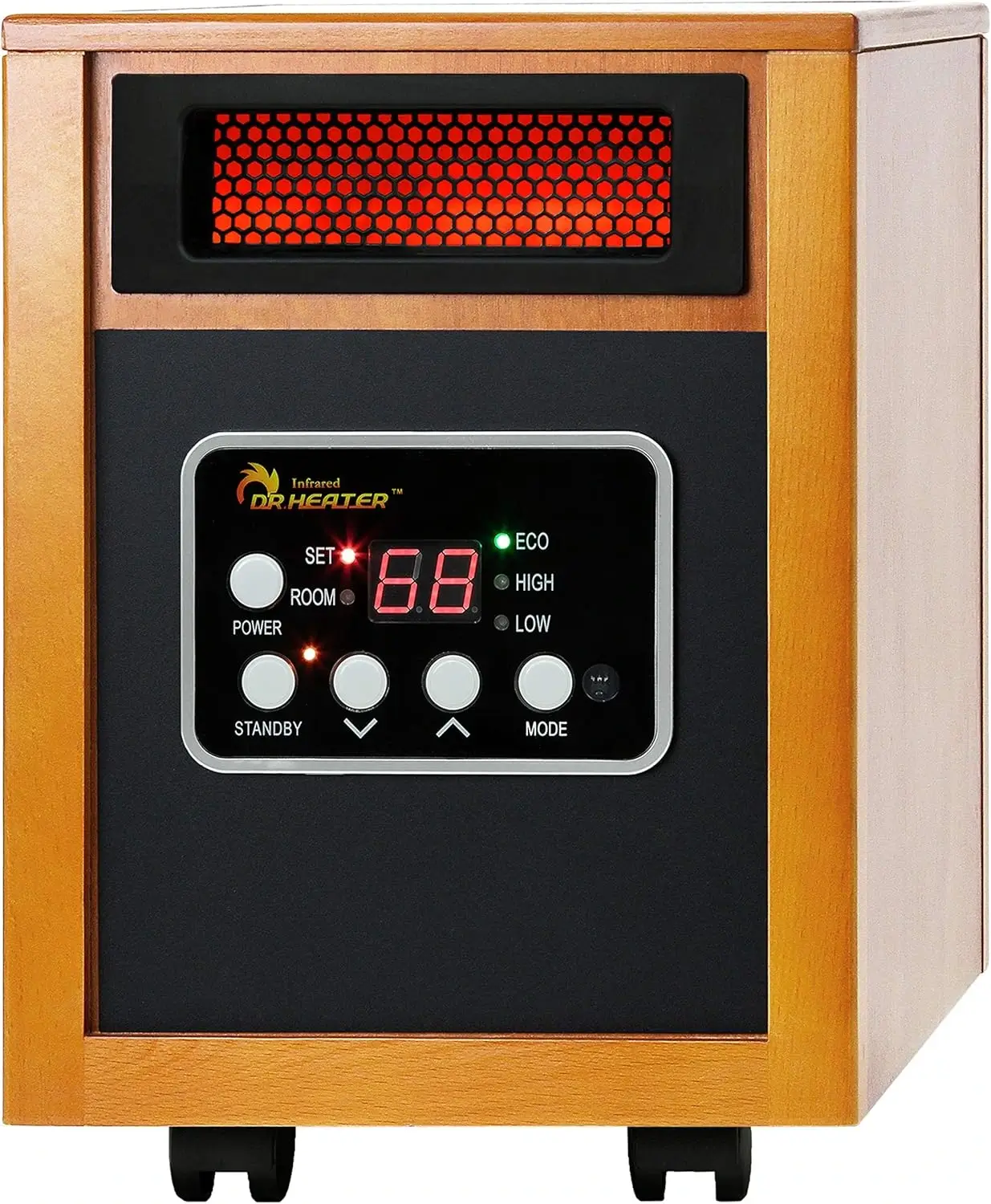
Dr Infrared Heater Portable
Space Heater
A portable cabinet design combining infrared elements with fan-assisted circulation.
- Check the exact model’s wattage, thermostat and timer specifications.
- Wheels make repositioning easier, but use requires a stable position with clearances.
- A thermostat can cycle the heater to maintain a set temperature.
- Protective switches are backups, not permission for unattended use.

Heat Storm Wave Floor to Wall
Infrared Space Heater
A compact floor-to-wall design for limited space.
- Check the listed 500-watt and 1,000-watt modes against the exact model number.
- Follow wall or floor installation instructions and clearance requirements.
- A digital thermostat helps manage the selected temperature.
- Child locks and touch-temperature claims do not make a heater safe for children or pets to approach.
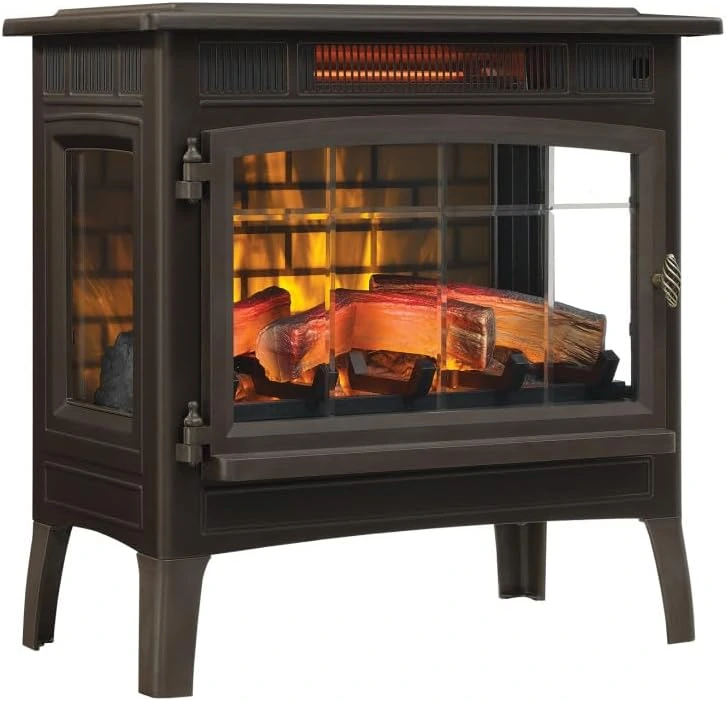
Bonus Pick: Best infrared Fireplace Heater

Duraflame Electric
Fireplace Stove Heater
Fireplace-style ambience with a flame effect that can operate separately from heat.
- Check the exact stove model’s wattage, controls and required clearances.
- Treat large square-foot figures as conditional supplemental-heating claims.
- Electric operation needs no fuel logs, but still requires safe electrical placement.
- Keep children and pets away; do not rely on a general cool-touch claim.
How We Picked the Best Infrared Heaters
We compare the design, published features and practical limitations of each heater. This refresh does not add measured heat-up times or long-term testing claims.
- Intended use Indoor, outdoor and fireplace-style products need different placement and installation checks.
- Output and cost Rated wattage sets full-power electricity use; thermostats can change runtime, not create free heat.
- Safety and placement Clearances, mounting instructions and protective features matter alongside controls.
- Everyday comfort Consider fan noise, portability and whether you need direct warmth or broader room circulation.
Scores are editorial assessments, not laboratory results. Features and certifications must be checked on the exact model; protective switches do not make unattended portable heating safe.
Compare the Infrared Heaters Side by Side
Infrared heaters come in different styles, from wall-mounted panels to portable cabinet units and even fireplace style designs. To help you quickly compare the top options, the table below highlights their key differences in heating power, best use, and overall value.
| Infrared Heater | Image | Best For | Main Benefit | Buy |
|---|---|---|---|---|
| EdenPURE Classic CopperPLUS Powerful Heating | ![]() |
Large rooms | Cabinet design / thermostat | Check price |
| Outdoor Electric Patio Infrared Heater Best Outdoor | ![]() |
Patios & outdoor use | Direct radiant warmth / verify outdoor rating | Check price |
| Heat Storm Phoenix Infrared Heater Wall Mounting | ![]() |
Bedrooms, offices | Compact mount / Wi-Fi version available | Check price |
| Dr Infrared Heater Portable Best All-Around | ![]() |
Large areas | Infrared + fan-assisted circulation | Check price |
| Heat Storm Wave Floor-to-Wall Heater Best Compact | ![]() |
Small rooms | Slim wall-mount or floor setup | Check price |
| Duraflame Fireplace Infrared Heater Best Ambience | ![]() |
Living rooms | Realistic fireplace + infrared heat | Check price |
Infrared Heaters Buying Guide: How to Pick the Right One
Choose the heating style and placement together
Radiant heat is useful within the heater’s line of sight. A cabinet model may also use a fan to circulate warm air. Wall mounting saves floor space but does not increase the electrical output, and room coverage depends on insulation, ceiling height and outdoor temperature. Treat large coverage figures as conditional supplemental-heating claims.
Calculate the running cost
Example: a 1,500-watt heater running at full power for four hours uses 1.5 kW × 4 hours = 6 kWh. At an illustrative tariff of $0.20/kWh, that costs $1.20. Thermostat cycling changes actual consumption. Infrared and other electric resistance heaters convert electricity into heat at the point of use; savings depend on how and where you heat, not simply an infrared label. For regular whole-room heating, also consider a heat pump: the Department of Energy explains that heat pumps transfer heat rather than generating it through resistance.
Follow portable-heater safety guidance
The CPSC recommends keeping portable heaters at least three feet from combustible materials, plugging them directly into a wall outlet and switching them off when going to bed. Do not use extension cords or power strips. Keep children and pets away; tip-over switches and cool-touch claims do not replace supervision.
Check the exact model and environment
Confirm the voltage, wattage, mounting clearances and controls in the manual. Wi-Fi and included feet can vary between versions. An outdoor heater needs a suitable stated weather rating and installation position; do not assume every patio heater is waterproof. Fan-equipped infrared heaters can make noise.
Separate warmth from humidity control
Heating changes relative humidity but does not collect water from the air. For persistent dampness, address the source and compare our dehumidifier picks. For airborne dust or pet particles, see the separate air purifier guide.
Conclusion: Which Infrared Heater is Best for You?
Choose the design that fits the job: a wall unit for limited floor space, a cabinet heater for portable supplemental warmth, an appropriately rated outdoor heater for a patio, or a fireplace-style model when ambience matters. Compare the exact controls and mounting requirements rather than assuming a higher price delivers cheaper heat. Use portable heaters while awake and present, and switch them off before sleeping.
Frequently Asked Questions
Are infrared heaters more efficient than regular space heaters?
Infrared is a heat-delivery method, not a guarantee of lower electricity use. Two 1,500-watt electric resistance heaters use the same electricity per hour at full power. Targeted warmth or thermostat cycling can change how long you need to run one.
Can infrared heaters heat an entire room?
Some can provide supplemental room heating, but results depend on wattage, insulation, layout and outdoor temperature. Direct radiant warmth works within the heater’s line of sight; fan-assisted models also circulate warm air.
Are infrared heaters safe to leave on overnight?
Turn portable electric space heaters off before going to sleep or leaving them unattended. Tip-over protection, overheat shutoff, thermostats and app controls do not replace supervision. Follow the manufacturer’s instructions and CPSC safety guidance.
How much does a 1,500-watt heater cost to run?
At full power it uses 1.5 kilowatt-hours per hour. Multiply that by your electricity rate: at an illustrative $0.20 per kilowatt-hour, the cost is $0.30 per full-power hour. Thermostat cycling changes actual consumption.