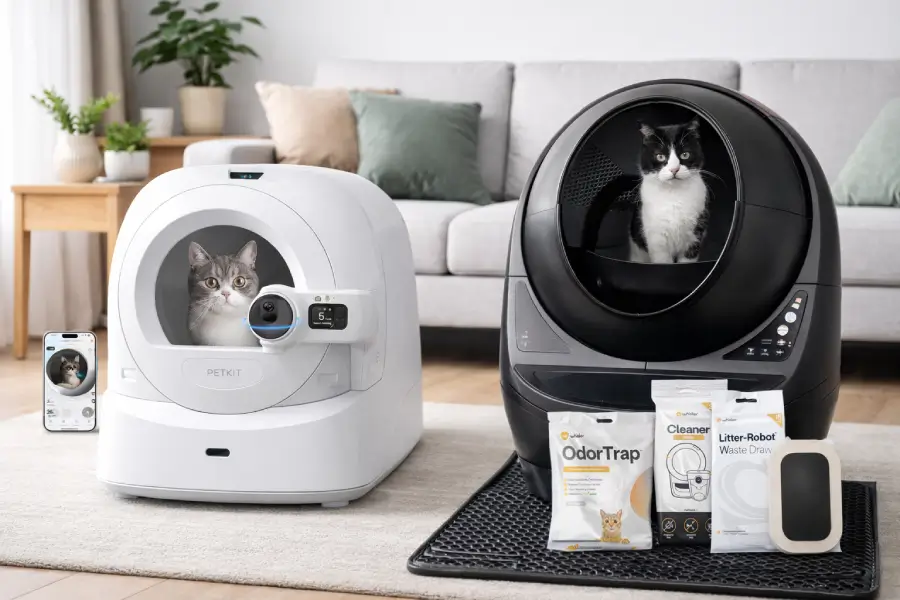

PETKIT vs Litter Robot: Pros, Cons and Real World Differences!
PETKIT and Litter Robot are two of the most talked about names in the self cleaning litter box market, but they approach automation in very different ways. While both brands aim to reduce daily scooping and simplify litter maintenance, differences in design, size, pricing and long term ownership experience can make one a better fit than the other depending on your home and cat.
This comparison focuses on the real world differences between PETKIT vs Litter Robot, including practical pros and cons, common trade offs, and what owners tend to notice after weeks or months of use. Rather than ranking one as the “best,” the goal is to help you understand how each system performs in everyday conditions.
If you are still exploring the broader category or want to see how these brands compare to other automatic options, our guide to best automatic litter boxes provides a wider overview before narrowing down your choice.
Table of contents
- PETKIT vs Litter Robot at a glance
- Design and size differences
- Cleaning mechanism and reliability
- Odor control and waste management
- App features and smart functions
- Maintenance and long term ownership
- Detailed feature comparison
- PETKIT vs Litter Robot pros and cons
- Which one makes more sense for different households
- When neither PETKIT nor Litter Robot is the right choice
- Conclusion
PETKIT vs Litter Robot at a glance
PETKIT and Litter Robot both offer fully automated litter box solutions, but they differ in size, design philosophy, and overall ownership experience. The table below highlights the key differences at a high level to help you quickly understand how each system compares before diving into the details.
| Feature |
Litter Robot |
PETKIT |
|---|---|---|
| Price range | Premium | Mid to premium |
| Overall size | Larger footprint | More compact |
| Cleaning method | Rotating globe system | Rotating drum system |
| App control | Yes | Yes |
| Multi cat support | Yes | Yes |
| Odor management | Sealed waste drawer | Sealed waste bin with deodorization |
| Best suited for | Larger homes and heavier use | Smaller spaces and modern apartments |
| Buy | Check Price on Amazon | Check Price on Amazon |
Design and size differences
One of the biggest real world differences between PETKIT and Litter Robot is how they fit into a home. Both are large compared to a standard litter pan, but they take up space in different ways, and that matters a lot for apartments, tighter hallways, or homes where the litter box has to sit in a visible corner.
Litter Robot: larger footprint and a more dominant presence
Litter Robot units are generally known for a bigger overall footprint and a “statement appliance” feel. This can be a positive if you want a sturdy, high capacity system that feels built for frequent use, but it can also be harder to place neatly in smaller rooms. Owners often treat it like a permanent fixture rather than something they move around.
PETKIT: more compact and easier to place in modern spaces
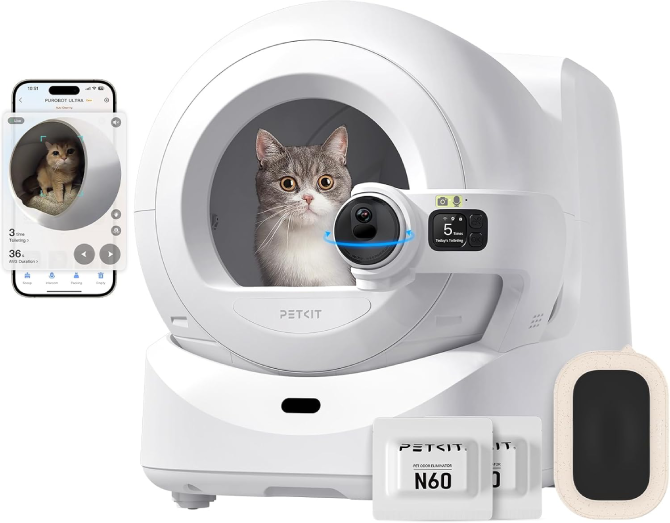
PETKIT models tend to feel more compact and furniture friendly, which can make them easier to fit into apartments, closets, or tucked away corners. The overall shape is typically less bulky, and for many households, that makes PETKIT the easier option to live with day to day, especially when space is limited.
What this means in practice
- If space is tight: PETKIT is often easier to position without dominating a room.
- If you prioritize capacity and a heavier duty feel: Litter Robot tends to feel more substantial, especially for heavier use.
- If you have a larger cat: interior comfort matters as much as footprint, so pay attention to entry height and how your cat moves inside the unit.
Cleaning mechanism and reliability
Both PETKIT and Litter Robot rely on rotating systems to separate waste from clean litter, but the way they execute this process feels slightly different in daily use.
Litter Robot uses a large rotating globe that completes a full cycle after each use, which many owners describe as consistent and predictable. PETKIT uses a rotating drum system that aims to achieve the same result with a more compact movement pattern.
In real world use, reliability tends to come down more to proper setup, litter choice, and regular maintenance than the core mechanism itself. Both systems can work well when used as intended, but both can also experience interruptions if sensors are obstructed or cleaning is delayed too long.
Odor control and waste management
Odor control is one of the main reasons people upgrade to an automatic litter box, and both PETKIT and Litter Robot are designed to keep waste sealed away between cleanings.
Litter Robot relies on a sealed waste drawer and gravity based separation, while PETKIT combines a sealed waste bin with additional deodorization features. In practice, odor performance depends heavily on how often the waste drawer is emptied and the type of litter used rather than the brand alone.
App features and smart functions
Both brands offer companion apps that provide usage tracking, notifications, and basic status updates. These features can be useful for monitoring activity in multi cat households or spotting changes in litter box habits.
While the apps add convenience, most owners find they are helpful rather than essential. Once the litter box is dialed in, daily use rarely requires frequent interaction with the app.
Maintenance and long term ownership
Long term ownership is where expectations matter most. Both PETKIT and Litter Robot reduce daily scooping, but neither eliminates maintenance entirely.
Regular emptying of the waste drawer, occasional deep cleaning, and sensor checks are part of owning either system. Over time, owners tend to value whichever unit fits their space, cleaning routine, and tolerance for upkeep rather than one being universally better than the other.
PETKIT vs Litter Robot pros and cons
Litter Robot |
PETKIT | |
|---|---|---|
| Pros |
|
|
| Cons |
|
|
| Buy | Check Price on Amazon | Check Price on Amazon |
Detailed feature comparison
The table below breaks down key features and ownership considerations for PETKIT vs Litter Robot in more detail, helping highlight where their approaches differ beyond basic automation.
| Feature | Litter Robot | PETKIT |
|---|---|---|
| Automation type | Fully automatic rotating globe | Fully automatic rotating drum |
| Manual scooping required | No, except for periodic deep cleaning | No, except for periodic deep cleaning |
| Multi cat support | Designed for frequent, heavy use | Suitable for single or moderate multi cat use |
| Cat weight detection | Yes, used for tracking and safety | Yes, used for tracking and safety |
| Safety sensors | Multiple sensors to pause rotation | Multiple sensors to stop movement |
| Odor control approach | Sealed waste drawer design | Sealed waste bin with added deodorization |
| Waste drawer capacity | Larger drawer, fewer emptying cycles | Smaller drawer, more frequent emptying |
| Noise level | Low to moderate during rotation | Low to moderate during rotation |
| Litter compatibility | Works best with clumping litter | Works best with clumping litter |
| App notifications | Usage alerts, drawer status, errors | Usage alerts, drawer status, maintenance reminders |
| Cleaning access | Large globe disassembly for deep cleaning | Removable components for easier handling |
| Overall footprint | Larger and more visually dominant | More compact and apartment friendly |
| Learning curve | Moderate, especially first setup | Moderate, especially app setup |
| Typical buyer profile | Heavy use households prioritizing capacity | Space conscious owners wanting full automation |
Which one makes more sense for different households
Choosing between PETKIT and Litter Robot often comes down to how each system fits your space, your cat, and your daily routine rather than one being universally better than the other.
- For apartments or smaller homes: PETKIT is often easier to place due to its more compact footprint and furniture friendly design.
- For multi cat households: Litter Robot generally feels more comfortable handling heavier and more frequent use.
- For larger cats: Interior space and entry height matter more than brand, so larger cats may feel more at ease with Litter Robot’s roomier interior.
- For budget conscious buyers: PETKIT typically offers a lower upfront cost while still delivering full automation.
Have we helped you decide?
Quick links to check current pricing for each option.


When neither PETKIT nor Litter Robot is the right choice
Despite their automation benefits, PETKIT and Litter Robot are not ideal for every household or every cat.
- Cats that strongly dislike enclosed litter boxes or rotating systems
- Homes with very limited floor space or strict layout constraints
- Owners looking for a very low cost entry into automatic litter boxes
- Situations where simplicity and minimal technology are preferred
In these cases, simpler automatic models or more affordable options such as cheap self cleaning litter boxes may be a better fit than higher end systems like PETKIT or Litter Robot.
Conclusion
PETKIT and Litter Robot both offer capable automated litter box solutions, but they cater to slightly different needs. Litter Robot tends to prioritize capacity and long term durability, while PETKIT focuses on a more compact design and modern features at a lower entry price.
Understanding how each system fits your space, your cat, and your expectations will lead to a more satisfying long term choice than simply picking one based on popularity.