How Often Should You Change Cat Litter? Full 2026 Guide

If you’re wondering how often you should change cat litter, scoop waste daily and fully replace clumping litter every 2–4 weeks. Non-clumping litter usually needs changing every 7–10 days. Multi-cat households require more frequent changes. If you notice strong odors or your cat avoiding the box, replace the litter sooner.
How Often to Change Cat Litter by Type
| Litter Type | Scoop | Full Change | Best For | Notes |
|---|---|---|---|---|
| Clumping clay | Daily | Every 2–4 weeks | Most households | Top off as needed; do a full dump + wash on change day. |
| Non-clumping clay | Daily | Every 7–10 days | Budget setups | Saturates faster; odor builds sooner than clumping. |
| Crystal / silica | Remove solids daily | Every 3–4 weeks | Odor control | Stir lightly every few days to keep absorption even. |
| Natural (wood/corn/wheat) | Daily | Every 2–3 weeks | Low-dust / eco options | Some types track more; monitor for dampness at the bottom. |
| Pine pellets | Daily | Every 1–2 weeks | Odor + budget | Pellets turn to sawdust; sift/refresh more often. |
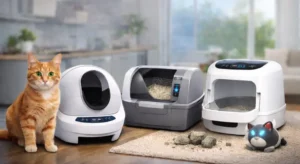
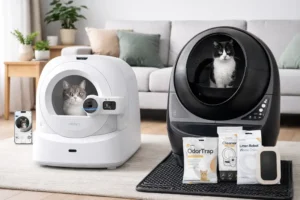
| Automatic litter box | Auto-removes waste | Replace tray/refill every 2–4 weeks | Busy & multi-cat homes | Schedule depends on cats + bin size; clean sensors monthly. |
💡 If you’re constantly battling odor, a self cleaning system may reduce how often you need full changes. See our guide to the best automatic litter boxes.
Multi Cat Household Adjustment Schedule
A good rule of thumb is simple: the more cats you have, the faster litter gets saturated (even if you scoop daily). To keep odors down and prevent litter box avoidance, use this schedule as a starting point and adjust if you notice smell or damp litter sooner.
| Number of Cats | Clumping Litter – Full Change | Non-Clumping Litter – Full Change | Maintenance Tip |
|---|---|---|---|
| 1 Cat | Every 2–4 weeks | Every 7–10 days | Scoop daily and top off as needed. |
| 2 Cats | Every 10–14 days | Every 5–7 days | Consider using larger boxes or adding a second box. |
| 3 Cats | Every 7–10 days | Every 3–5 days | Increase scooping to twice daily if odor develops. |
| 4+ Cats | Every 5–7 days | Every 2–4 days | Strongly consider multiple boxes or an automatic system. |
Tip: If you have multiple cats, aim for 1 litter box per cat + 1 extra. When boxes are overcrowded, cats are far more likely to start avoiding them (even if you clean daily).
Signs You Should Change the Litter Sooner
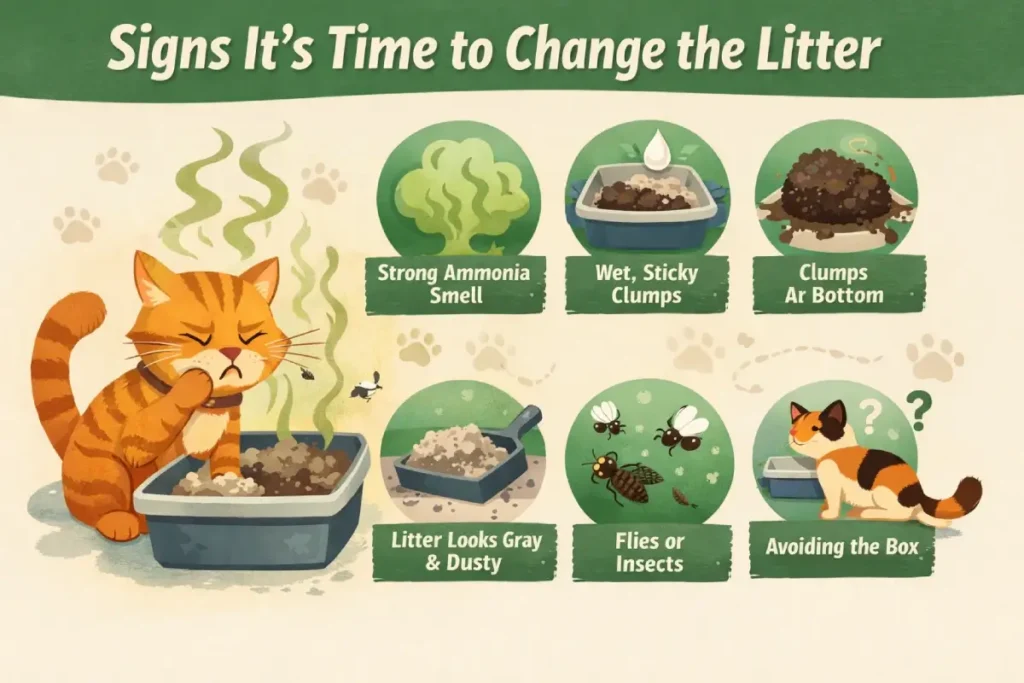
Even if you’re following a regular schedule, some situations require changing the litter earlier. Cats are extremely sensitive to smell and texture, and small changes can make them avoid the box altogether. Watch for these signs:
- Strong ammonia odor: If you can smell it when walking into the room, it’s overdue.
- Wet or sticky clumps at the bottom: Indicates saturation and poor absorption.
- Litter turning gray, dusty, or muddy: A sign it’s breaking down.
- Flies or insects near the box: Waste buildup is attracting pests.
- Your cat hesitates or avoids the box: One of the earliest behavioral warning signs.
- Accidents outside the litter box: Often caused by cleanliness issues.
If any of these occur, don’t wait for your scheduled change day. Replace the litter completely, wash the box with warm water and mild soap, and refill with fresh litter.
Health Risks of Not Changing Cat Litter Often Enough
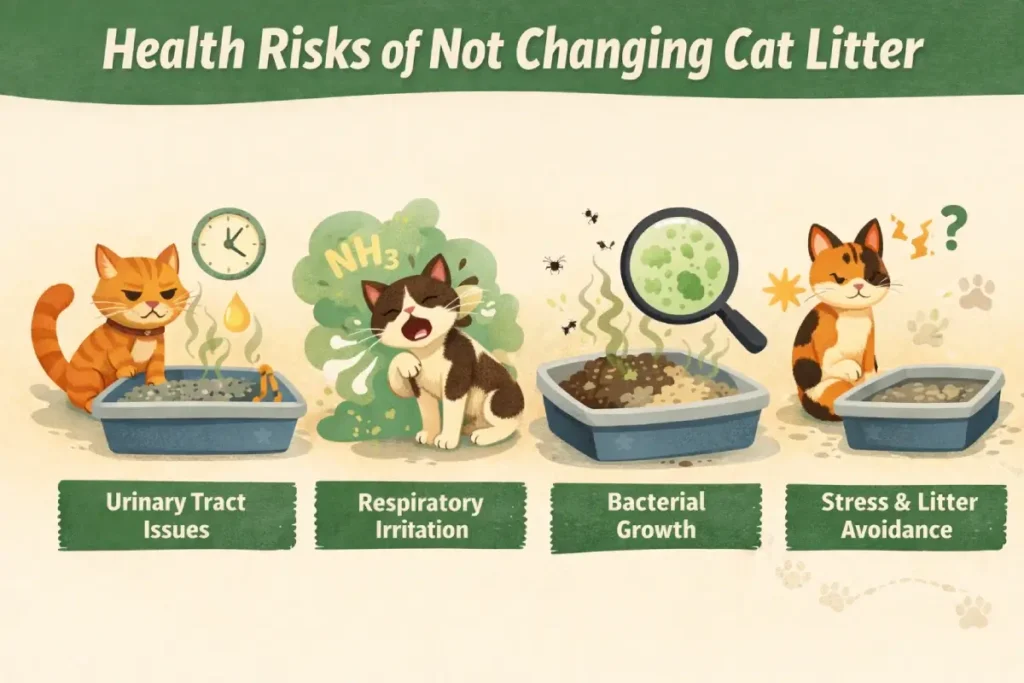
Delaying litter changes doesn’t just cause odor, it can affect your cat’s health and behavior. When litter becomes saturated, ammonia from urine builds up quickly. In enclosed spaces, this can irritate both cats and humans. Here are the main risks:
| Health Risk | What Happens | Why It Matters |
|---|---|---|
| Urinary Tract Issues | Cats may avoid urinating regularly due to dirty litter. | Holding urine increases risk of UTIs, bladder inflammation, and crystals. |
| Respiratory Irritation | Ammonia fumes build up in enclosed areas. | Can irritate lungs, especially in small rooms with poor ventilation. |
| Bacterial Growth | Warm, moist litter becomes a breeding ground for bacteria. | Raises infection risk and worsens odor buildup. |
| Stress & Litter Avoidance | Cats hesitate, avoid the box, or eliminate outside it. | Behavioral issues are harder to fix than maintaining hygiene. |
When It’s Time to Upgrade to an Automatic Litter Box
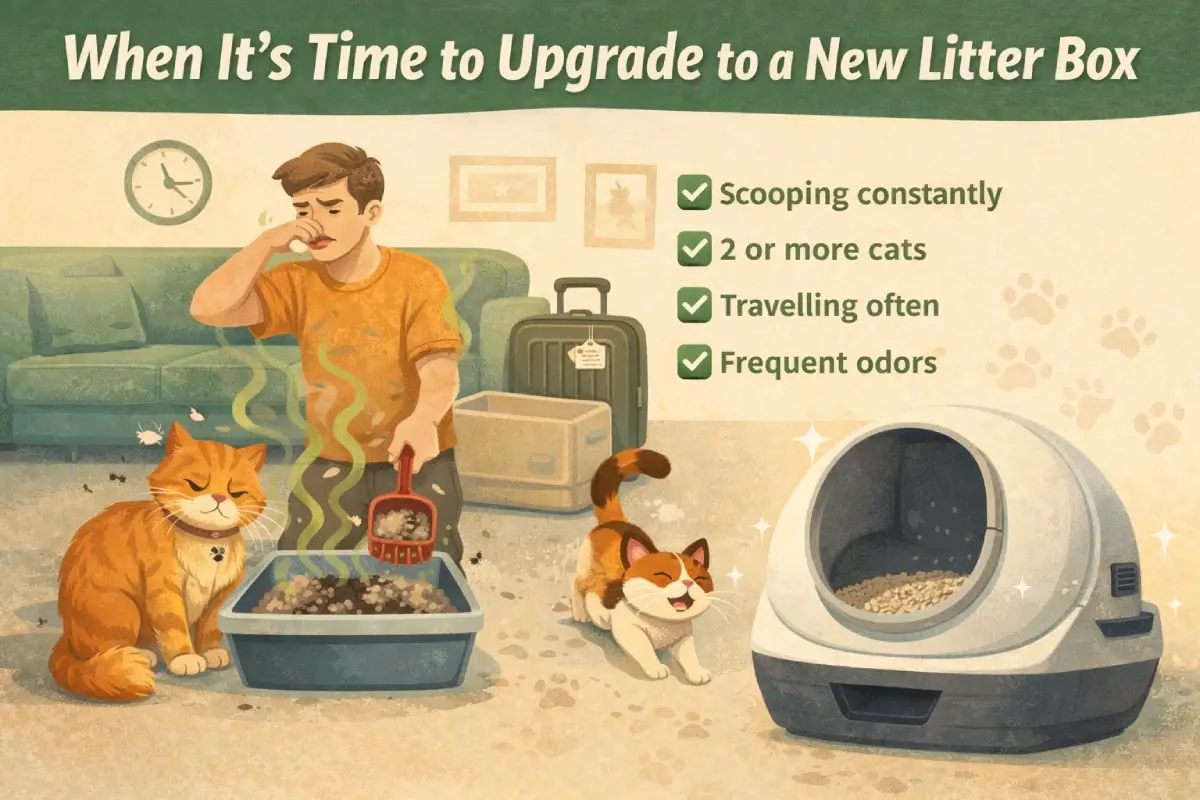
If you feel like you’re constantly scooping, battling odors, or changing litter more often than expected, it may be time to upgrade your setup.
Automatic litter boxes remove waste after each use, helping reduce odor buildup and extend the time between full litter replacements. They’re especially useful in high-traffic litter boxes or busy households. You may want to consider upgrading if:
- You scoop multiple times per day
- You have 2 or more cats
- Odor becomes noticeable within a few days
- You travel frequently
One of your cats is particularly large and struggles with standard boxes
For larger breeds like Maine Coons or Ragdolls, standard automatic models may feel cramped. In that case, check our guide to the best automatic litter boxes for large cats for more spacious options.
If budget is your main concern, there are also reliable entry level models that reduce daily maintenance without the premium price tag. See our breakdown of the best cheap self cleaning litter boxes.
Upgrading won’t eliminate maintenance entirely, but it can significantly reduce daily scooping and help maintain a cleaner environment between full litter changes.
Frequently Asked Questions
How often should I completely empty a litter box?
Clumping litter typically needs a full change every 2–4 weeks, while non-clumping litter should be replaced every 7–10 days. Multi-cat households require more frequent full replacements to prevent odor buildup and bacterial growth.
Do I need to wash the litter box every time I change the litter?
Yes. During a full litter replacement, wash the box with warm water and mild soap. Avoid strong chemical cleaners, as residue smells may discourage your cat from using the box.
Can I just keep adding fresh litter instead of changing it?
Topping off helps temporarily, but it doesn’t remove bacteria, urine saturation, or trapped odor. Eventually, a full dump and wash are necessary to maintain hygiene and prevent litter box avoidance.
How often should I change litter with two cats?
With two cats, clumping litter usually needs a full change every 10–14 days. Non-clumping litter may require replacement every 5–7 days, depending on odor and moisture buildup.
Is it unhealthy to leave litter unchanged for a month?
Yes. Leaving litter unchanged for too long can lead to ammonia buildup, respiratory irritation, and increased risk of urinary tract problems. Regular cleaning protects both your cat’s health and your home’s air quality.
Best Cat GPS Trackers & Collars to Prevent Lost Pets