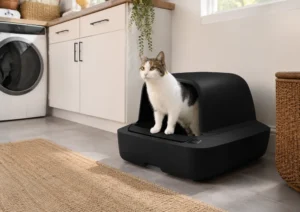
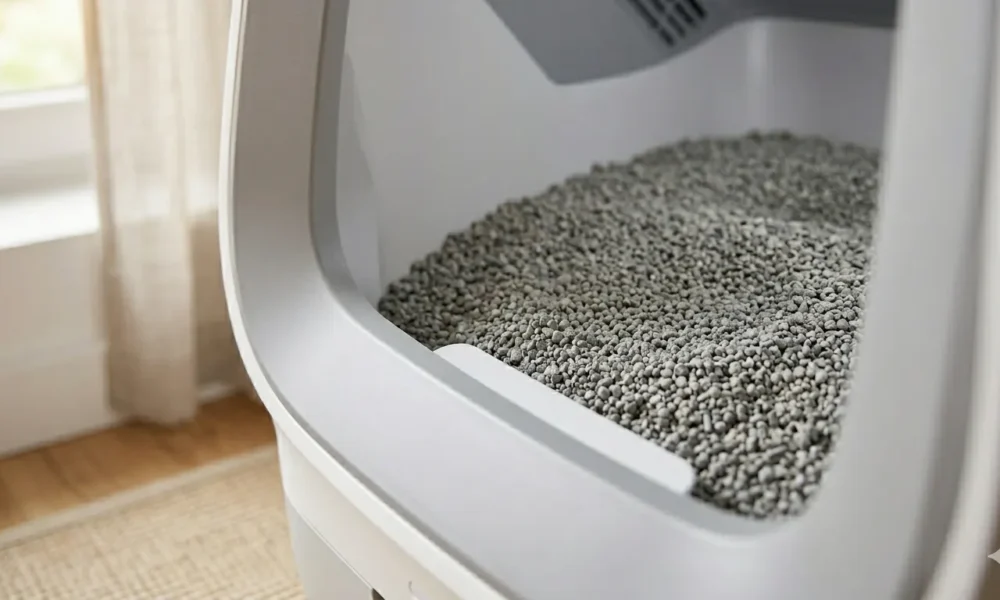

Automatic litter boxes can be a huge upgrade, but they only work well with the right litter. Use the wrong type and you can end up with weak clumps, more odor, dirty sensors, and messy cleaning cycles.
The short answer is that hard clumping, low dust clay litter is usually the best option for automatic litter boxes. Most self cleaning models are designed around that type of performance, especially when they rely on sifting or rotating systems to separate waste from clean litter.
In this guide, we’ll break down what type of cat litter works best, what to avoid, and which features matter most if you want your automatic box to stay cleaner and run more reliably. If you’re still comparing devices, our guide to the best automatic litter boxes gives a broader look at the top systems.
Table of contents
Disclaimer: This article is for general informational purposes only. Always check your automatic litter box manufacturer’s instructions before changing litter type, as some models have more specific requirements than others.
What Type of Litter Works Best in Automatic Litter Boxes?
For most automatic litter boxes, the best choice is clumping clay litter with low dust and medium-size granules. That combination tends to give the most reliable results during the cleaning cycle.
Automatic litter boxes are designed to separate waste from clean litter. To do that properly, the litter has to form firm clumps that hold together when the machine rotates, sifts, or rakes through the bed. If the clumps fall apart too easily, dirty litter stays behind and the box gets smellier faster.
That’s why hard-clumping clay formulas usually perform better than crystal, pellet, or non-clumping options. They are simply better matched to how these systems are built.
In most cases, the ideal automatic litter box formula is: unscented or lightly scented, hard clumping, low dust, and not too coarse or too fine.
What to Avoid
A lot of automatic litter box problems are not caused by the machine itself, but by the litter inside it. Some litter types just do not cooperate well with self-cleaning systems.
| Litter Type | Good for Automatic Boxes? | Why It Can Cause Problems |
|---|---|---|
| Non clumping litter | No | Doesn’t separate waste properly, so the machine cannot remove soiled areas cleanly. |
| Crystal / silica litter | Usually no | Many automatic boxes are built around clump separation, not moisture absorption alone. |
| Wood pellets | No | Too large and inconsistent for most sifting or rotating systems. |
| Very dusty clay litter | Avoid | Dust can collect on sensors, inner walls, and moving parts over time. |
| Very lightweight natural litter | Sometimes | Some formulas clump too softly or track more, depending on the machine. |
That doesn’t mean every box reacts exactly the same way, but in general, the more your litter struggles to form clean, solid clumps, the worse your automatic system is likely to perform.
If you’re comparing box types, this also helps explain why some models are more forgiving than others. In our PETKIT vs Litter Robot comparison, you can see how design differences affect everyday use and litter tolerance.
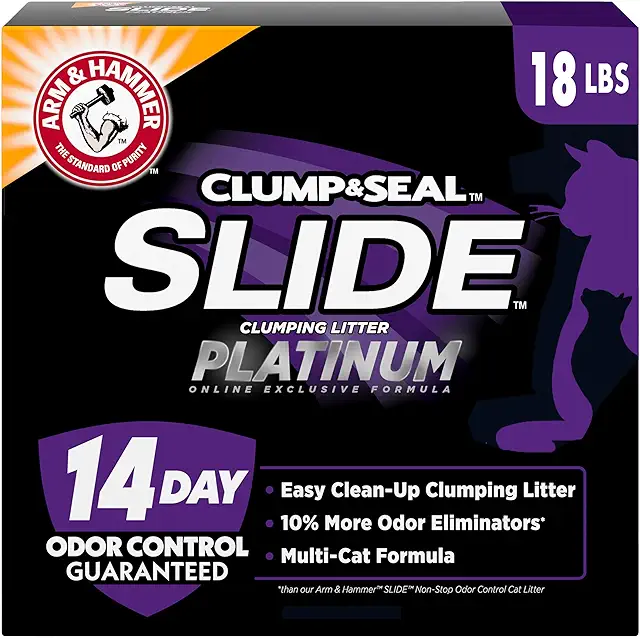
Low-Dust Clumping Cat Litter
Good automatic litter boxes work best with firm clumps, low dust, and clean sifting performance.
Pricing and availability may change.The 3 Things That Matter Most
Once you narrow it down to clumping litter, three factors make the biggest difference in real-world performance.
1. Clumping Strength
This is the most important one. Strong clumps stay intact when the machine runs, which keeps the clean litter cleaner and helps control odor better. Weak clumps tend to smear, crumble, or leave behind residue.
2. Dust Levels
Low-dust litter is better for both the machine and your home. Excess dust can coat the inside of the unit, settle around sensors, and create more mess around the litter box area. It can also be unpleasant for cats and humans in smaller spaces.
3. Granule Size
Granule size matters more than many people think. Very coarse litter may not sift cleanly, while extra-fine litter can track more and sometimes behave inconsistently. A medium-grain texture tends to be the safest balance.
Litter Types Compared
Here’s a quick breakdown of how the main litter categories usually perform in automatic litter boxes.
| Litter Type | Clumping | Dust | Compatibility with Automatic Boxes | Overall Verdict |
|---|---|---|---|---|
| Clumping clay | Strong | Low to medium, depending on brand | Excellent | Best overall choice |
| Crystal / silica | Weak or none | Low | Limited | Usually not ideal |
| Corn / wheat / other natural clumping litter | Varies | Usually low | Mixed | Can work, but depends on formula |
| Wood pellets | Poor for this use | Low | Poor | Not recommended |
| Non-clumping litter | None | Varies | Poor | Not recommended |
Best Cat Litter Options for Automatic Litter Boxes
If you want a simple starting point, these are the types of litter profiles that usually work best in self-cleaning boxes.
Best Overall: Hard Clumping Low Dust Clay Litter
This is the safest choice for most users. It gives the best balance of strong clumps, odor control, and machine compatibility. If you just want the most reliable option, start here.
Best for Multi Cat Homes: Strong Odor-Control Clay Litter
If odor is your biggest issue, look for a formula that still clumps hard but adds better smell control. This matters more in busy litter boxes where waste volume builds up quickly.
Best for Cleaner Operation: Premium Low Dust Clay Litter
Some litters cost more but create less airborne dust and leave less residue inside the drum or waste area. These can be worth it if your box sits in a main living area or if you want less maintenance.
For larger cats or heavier use, litter performance matters even more because clumps tend to be bigger and the system has to work harder. That’s one reason our guide to self cleaning litter boxes for large cats focuses so much on real-world usability.
Low-Dust Clumping Cat Litter
Good automatic litter boxes work best with firm clumps, low dust, and clean sifting performance.
Pricing and availability may change.Tips for Better Performance
Even the right litter can underperform if the setup is off. A few simple habits can make automatic litter boxes work noticeably better.
| Tip | Why It Helps |
|---|---|
| Do not overfill the litter bed | Too much litter can affect how the machine rotates, sifts, or detects weight. |
| Top up with the same litter type consistently | Mixing formulas can weaken clumping and change how the system behaves. |
| Clean interior surfaces regularly | Even low-dust litter leaves some residue over time, especially in humid conditions. |
| Watch your cat’s response | Some cats are more sensitive to strong scents, textures, or dusty formulas. |
| Follow the manufacturer’s fill line | This helps the machine run the way it was designed to. |
If you’re shopping on a tighter budget, litter choice becomes even more important because cheaper self-cleaning boxes can be less tolerant of poor-performing formulas. Our guide to cheap self-cleaning litter boxes is a good companion article if that’s the angle you’re comparing.
Final Verdict
The best cat litter for automatic litter boxes is usually a hard clumping, low dust clay litter with medium size granules. That type gives the cleanest separation, better odor control, and the most reliable performance across most automatic cleaning systems.
If you want the simplest rule to follow, avoid non clumping, pellet, or overly dusty formulas and stick to litter that forms tight, durable clumps. In most homes, that will give you fewer cleaning issues and a noticeably better experience day to day.
FAQ
Can you use any cat litter in an automatic litter box?
No. Most automatic litter boxes work best with clumping litter, especially clay-based formulas that create firm clumps and sift cleanly during the cleaning cycle.
Is crystal litter good for automatic litter boxes?
Usually not. Some automatic litter boxes are not designed for crystal or silica litter, especially if they rely on clump separation. Always check your specific model’s instructions first.
Why does my automatic litter box still smell bad?
Odor problems are often linked to weak clumping litter, too much dust buildup, inconsistent cleaning, or using a litter type that does not separate waste effectively.
What is the best litter type for Litter Robot or PETKIT?
In most cases, low-dust clumping clay litter is the safest option. It tends to work best with the way these machines sift and separate waste from clean litter.