TheraGun vs Hypervolt: Pros, Cons and Real World Differences (2026)

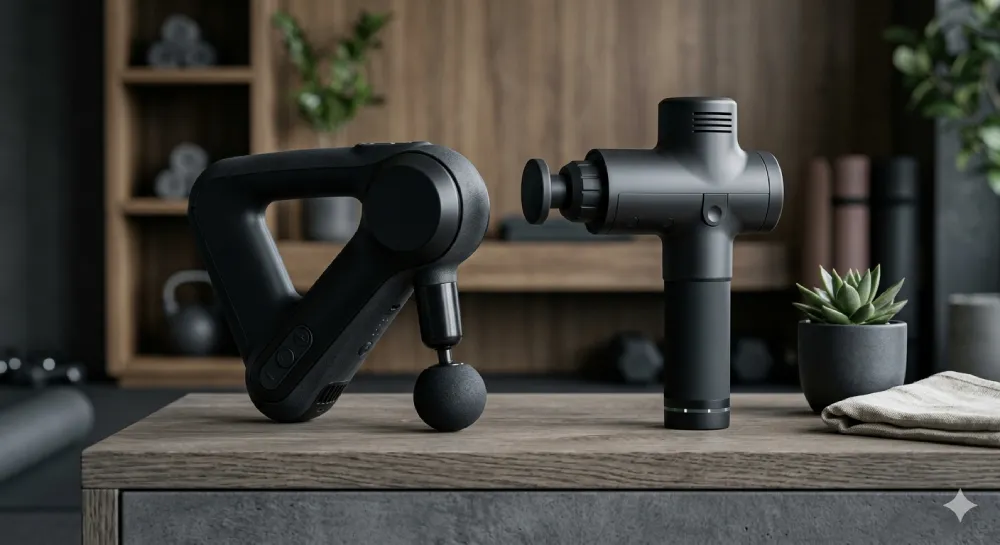
TheraGun and Hypervolt are two of the most recognized names in the massage gun space, but they take slightly different approaches to muscle recovery, design, and everyday usability. Both brands are widely used by athletes, physiotherapists, and casual users looking to relieve soreness, improve circulation, and speed up recovery but choosing between them isn’t always straightforward.
This comparison focuses on the real world differences between TheraGun vs Hypervolt, including performance, ergonomics, noise levels, and long term ownership experience. Rather than simply declaring a winner, the goal is to help you understand how each device actually feels to use day to day and which one better fits your routine.
If you’re still exploring the category as a whole, our guide to the best massage guns provides a broader overview before narrowing down your choice.
Table of contents
- TheraGun vs Hypervolt at a glance
- Design and ergonomics differences
- Power and performance
- Noise levels and comfort
- Attachments and features
- Battery life and portability
- Maintenance and long term ownership
- Detailed feature comparison
- TheraGun vs Hypervolt pros and cons
- Which one makes more sense for different users
- When neither TheraGun nor Hypervolt is the right choice
- Conclusion
TheraGun vs Hypervolt at a glance
TheraGun and Hypervolt are both premium massage guns built for muscle recovery, but they differ in ergonomics, noise levels, attachments, and overall feel during everyday use. The table below highlights the main differences at a glance so you can quickly see how each model compares before getting into the finer details.
| Feature | 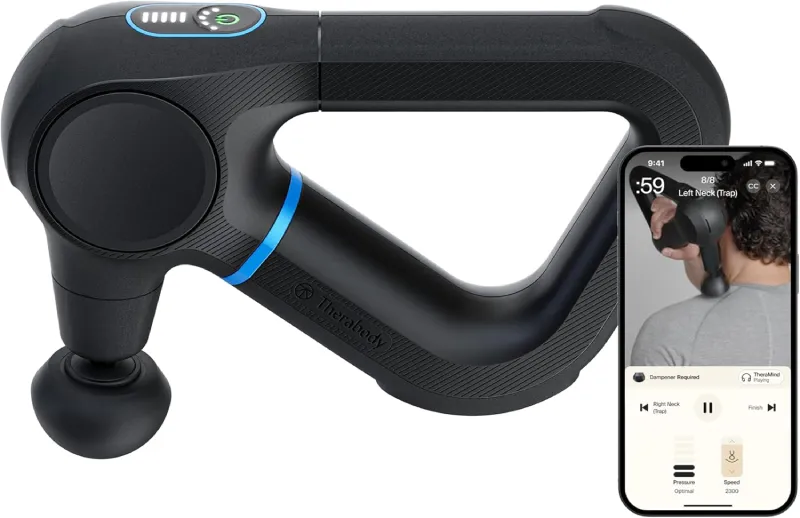 TheraGun
 |  Hypervolt
 |
|---|---|---|
| Price range | Premium | Premium to upper mid-range |
| Overall feel | More aggressive and deep tissue focused | Smoother and more balanced |
| Ergonomics | Triangular multi-grip handle | Traditional straight handle |
| Noise level | Moderate | Generally quieter |
| Attachments | Targeted recovery heads | Useful everyday attachment mix |
| App support | Yes | Yes |
| Best suited for | Users wanting stronger percussive feel | Users wanting comfort and quieter sessions |
| Buy | Check Price on Amazon | Check Price on Amazon |
Design and ergonomics differences
One of the biggest real world differences between TheraGun and Hypervolt is how they feel in your hand during actual use. Both are designed for muscle recovery, but their shape, grip, and weight distribution create very different experiences, especially during longer sessions or when targeting hard-to-reach areas like the upper back.
While both brands offer premium build quality, ergonomics often matter more than raw power over time. If you’re using a massage gun regularly, comfort and ease of handling can make a significant difference in how often you actually reach for it.
TheraGun: unique multi-grip design for better reach
TheraGun stands out with its triangular handle, which allows for multiple grip positions. This design makes it easier to reach areas like the shoulders, lower back, and neck without straining your wrist. Many users find this especially helpful when using the device on themselves rather than relying on someone else.
The overall feel is slightly more “tool-like,” with a focus on functionality over simplicity. While it may take a bit of time to get used to, the added flexibility can be a major advantage for targeted recovery sessions.
Hypervolt: simpler and more familiar feel
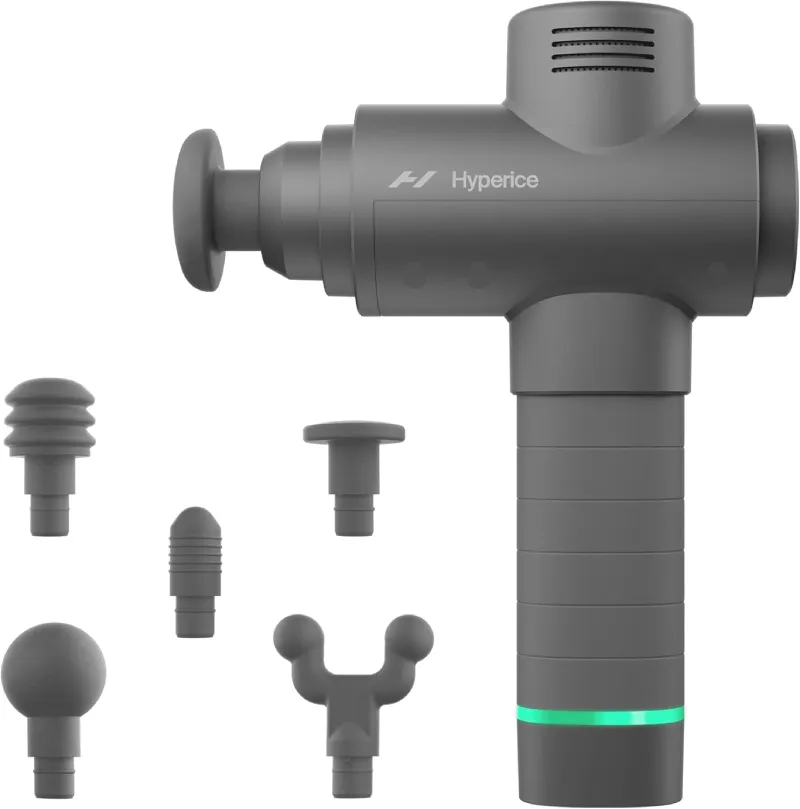
Hypervolt uses a more traditional straight handle design, similar to most massage guns on the market. This makes it intuitive and easy to use right away, with a balanced weight that feels comfortable for general use across different muscle groups.
While it doesn’t offer the same reach advantages as TheraGun, many users prefer its simplicity and lighter feel, especially for quick sessions or when sharing the device with others in the household.
What this means in practice
- If you want easier self-use on hard-to-reach areas: TheraGun’s multi-grip handle gives it a clear advantage.
- If you prefer something simple and intuitive: Hypervolt is easier to pick up and use immediately.
- If comfort matters during longer sessions: weight balance and grip style can make a noticeable difference over time.
Power and performance
When comparing TheraGun vs Hypervolt, performance is often the deciding factor. Both devices are designed to deliver percussive therapy for muscle recovery, but they differ in how that power is delivered and how it feels during real use. The difference is less about raw specs on paper and more about intensity, depth, and overall sensation on the muscle.
If you’re unsure how much power actually matters or what kind of results to expect, it’s worth understanding the basics in do massage guns actually work, where we break down the science and real world outcomes of percussive therapy.
TheraGun: deeper and more aggressive percussive feel
TheraGun devices are generally known for a stronger, more aggressive massage style. They tend to deliver deeper strokes into the muscle, which can feel more intense but also more effective for breaking up tight knots and targeting deeper tension points.
This makes TheraGun a popular choice for users who prefer a high-impact recovery tool, especially after intense workouts or heavy training sessions where deeper muscle engagement is needed.
Hypervolt: smoother and more controlled performance
Hypervolt takes a slightly different approach, focusing on a smoother and more controlled percussive motion. The experience feels less aggressive overall, which many users find more comfortable, especially for longer sessions or more sensitive muscle areas.
While it may not feel as deep or intense as TheraGun, Hypervolt still delivers effective muscle relief and is often preferred by users who want consistent recovery without excessive force.
What this means in practice
- If you want maximum intensity and deep tissue impact: TheraGun generally delivers a stronger, more aggressive feel.
- If you prefer a smoother and more comfortable experience: Hypervolt is easier to tolerate, especially for daily use.
- If you’re new to massage guns: a less aggressive option like Hypervolt may feel more approachable at first.
Noise levels and comfort
Noise is one of the most noticeable differences between TheraGun and Hypervolt, especially if you plan to use the device regularly at home or in shared spaces.
TheraGun: more noticeable during use
TheraGun models tend to be slightly louder, particularly at higher speeds. While not excessive, the sound is more noticeable during use and can feel more “mechanical” compared to other devices.
Hypervolt: quieter and smoother
Hypervolt is generally quieter and more refined, making it easier to use while watching TV or relaxing. The smoother operation also contributes to a more comfortable overall experience.
What this means in practice
- If noise matters: Hypervolt is usually the better choice.
- If you prioritize power over sound: TheraGun’s noise is a trade-off for stronger intensity.
Attachments and features
Both TheraGun and Hypervolt come with multiple attachments and app support, but their focus is slightly different.
TheraGun: more targeted recovery tools
TheraGun attachments are designed for specific muscle groups and deeper treatment. The app also offers guided routines, which can be useful if you want structured recovery sessions.
Hypervolt: simple and practical setup
Hypervolt focuses on ease of use, with versatile attachments that cover most needs without much setup. The app is helpful but not essential for everyday use.
What this means in practice
- If you want guided routines and precision: TheraGun offers more structured features.
- If you prefer simplicity: Hypervolt is easier to use right away.
Battery life and portability
Battery life and overall portability can make a difference if you plan to use your massage gun frequently or take it on the go.
TheraGun: solid battery with a slightly bulkier feel
TheraGun offers reliable battery performance, but the design is a bit larger and less travel-friendly. It’s better suited for home use or dedicated recovery sessions.
Hypervolt: lighter and easier to carry
Hypervolt is typically lighter and more compact, making it easier to pack in a gym bag or take while traveling without much hassle.
What this means in practice
- If you travel often: Hypervolt is easier to carry around.
- If you mainly use it at home: TheraGun’s size is less of a concern.
Maintenance and long term ownership
Both TheraGun and Hypervolt are low-maintenance devices, but long term experience depends on how often you use them and how well you care for them.
If you’re new to massage guns, it’s worth checking our guide on how to use a massage gun to avoid overuse and get the best results.
TheraGun: built for heavy, frequent use
TheraGun devices tend to feel more heavy-duty and are often used in more intense recovery routines. With regular use, occasional cleaning and proper handling are usually enough to keep it performing well over time.
Hypervolt: easier everyday ownership
Hypervolt’s simpler design makes it easy to maintain, with fewer adjustments or learning curve. For many users, it’s a more “grab and go” device that fits easily into daily routines.
What this means in practice
- If you use it frequently and intensely: TheraGun feels more robust.
- If you want something low effort: Hypervolt is easier to live with day to day.
Detailed feature comparison
The table below breaks down the key differences between TheraGun and Hypervolt to help you compare specs and everyday usability side by side.
| Feature | TheraGun | Hypervolt |
|---|---|---|
| Percussion style | Deeper, more aggressive | Smoother, more controlled |
| Speed levels | Multiple (model dependent) | Multiple (model dependent) |
| Ergonomics | Triangular multi-grip | Standard straight handle |
| Noise level | Moderate | Quieter overall |
| Attachments | Targeted recovery heads | Versatile general-use heads |
| App support | Guided routines | Basic tracking and guidance |
| Portability | Slightly bulkier | More compact and travel-friendly |
| Best for | Deep tissue and intense recovery | Daily use and comfort |
TheraGun vs Hypervolt pros and cons
TheraGun
- Stronger and deeper percussive feel
- Unique multi-grip handle improves reach
- Great for targeted deep tissue work
- Structured app routines can be useful
- Usually louder during use
- Feels bulkier than Hypervolt
- Can be too aggressive for some users
- Premium pricing
Hypervolt
- Quieter and smoother overall feel
- Easy to use right away
- Lighter and more travel-friendly
- Comfortable for regular everyday sessions
- Less intense than TheraGun
- Standard handle offers less reach
- May feel less specialized for deep tissue work
- Still not a budget option
Which one makes more sense for different users
Choosing between TheraGun and Hypervolt usually comes down to how intense you want the massage to feel, how often you plan to use it, and whether ergonomics matter more to you than simplicity.
- For deeper, more aggressive muscle work: TheraGun is usually the better fit.
- For quieter and more comfortable daily use: Hypervolt makes more sense.
- For athletes and tougher recovery sessions: TheraGun often feels more powerful, which is why many people also compare it with the options in our guide to massage guns for athletes.
- For travel or easier handling: Hypervolt is generally the simpler option to live with.
- For athletes and tougher recovery sessions: TheraGun often feels more powerful, which is why many people also compare it with the options in our guide to massage guns for athletes.
Have we helped you decide?
Quick links to check current pricing for each option.
When neither TheraGun nor Hypervolt is the right choice
While both TheraGun and Hypervolt are premium options, they’re not always the best fit for every situation.
- If you’re on a tighter budget: there are solid alternatives in our guide to budget massage guns that still deliver good performance.
- If you want something more compact: smaller options in our mini massage guns guide are easier to carry and store.
- If you’re focused on a specific condition: targeted options like those in our massage guns for tennis elbow may be more suitable.
- If you only need light recovery: a less powerful and more affordable device may be enough for your needs.
Conclusion
TheraGun and Hypervolt are both excellent massage guns, but they cater to slightly different preferences. TheraGun focuses on deeper, more intense percussive therapy with a unique ergonomic design, while Hypervolt delivers a smoother, quieter, and more user-friendly experience.
The right choice depends less on which one is “better” and more on how you plan to use it. If you want stronger deep tissue work and better reach, TheraGun stands out. If you prefer comfort, simplicity, and quieter sessions, Hypervolt is often the easier option to live with.
Understanding your recovery needs, tolerance for intensity, and usage habits will lead to a much better long-term experience than simply choosing based on brand popularity.