Massage Chair Statistics (2026): Statistics, Usage & Market Growth

Last updated: January 2026 • Scope: United States
Massage chairs have evolved from luxury spa equipment into mainstream home wellness devices. With increasing interest in home recovery, stress relief, and ergonomic comfort, the global massage chair market has grown rapidly in recent years.
Advances in robotic massage systems, zero-gravity reclining technology, and AI body scanning have helped modern massage chairs become more effective and accessible for everyday consumers.
This report compiles the most recent massage chair statistics, including global market size, adoption trends, pricing data, and technology innovations shaping the industry.
If you’re considering buying one after reviewing the data, you can compare current models in our guide to the best rated massage chairs.
Key Massage Chair Statistics
- The global massage chair market is estimated at $3.5 billion in 2025.
- The market is projected to reach $6.5 billion by 2032.
- The industry is expected to grow at roughly 7–8% CAGR.
- Asia-Pacific accounts for around 45% of global massage chair sales.
- North America represents about 25% of global demand.
- Premium massage chairs often cost between $4,000 and $10,000+.
- Many modern massage chairs include zero gravity reclining and body scanning technology.
- Back pain affects a large share of adults annually, helping drive demand for home therapy devices.
- Smart massage chairs with app control and AI features are one of the fastest-growing product categories.
- Home wellness spending and recovery-oriented furniture demand both increased after the pandemic era.
Estimated global massage chair market size in 2025.
Projected global market size by 2032.
Approximate share of global massage chair sales from Asia-Pacific.
Estimated North American share of global demand.
Typical starting price for entry-level massage chairs.
Common upper range for premium massage chair systems.
Massage Chair Market Size
The massage chair industry has grown significantly as consumers increasingly invest in home wellness and recovery products.
According to Future Market Insights, the global massage chair market is estimated at approximately $3.5 billion in 2025 and is projected to exceed $6.5 billion by 2032.
Other industry estimates reported by ResearchAndMarkets suggest similar long-term growth driven by rising demand for wellness technology and ergonomic furniture.
| Estimate Source | 2025 Value | Projected Value | Forecast Window |
|---|---|---|---|
| Future Market Insights | $3.5 billion | $6.5 billion | 2032 |
| ResearchAndMarkets | Varies by report scope | Long-term growth expected | Multiple forecast windows |
Regional Market Share
Asia-Pacific currently dominates the massage chair market due to strong manufacturing capabilities and high consumer adoption in countries such as Japan, China, and South Korea.
According to Cognitive Market Research, Asia-Pacific accounts for nearly half of global massage chair revenue.
| Region | Estimated Market Share |
|---|---|
| Asia Pacific | 45% |
| North America | 25% |
| Europe | 20% |
| Other Regions | 10% |
Massage Chair Price Segments
Massage chairs are sold across several price categories, ranging from affordable entry-level recliners to premium full-body robotic massage systems.
| Segment | Typical Price Range | What Buyers Usually Get |
|---|---|---|
| Entry Level | $800 – $1,500 | Basic vibration, limited roller systems, and simpler recline features. |
| Mid Range | $1,500 – $3,500 | Improved rollers, heat, air compression, and better comfort features. |
| Premium | $4,000 – $10,000+ | Advanced body scanning, SL-track systems, zero gravity, and smart controls. |
Consumer Demand Drivers
Several long-term health and lifestyle trends are driving demand for massage chairs, including remote work, sedentary routines, rising stress levels, and greater interest in at-home wellness.
According to the Centers for Disease Control and Prevention, back pain affects a large portion of adults annually, helping explain the popularity of home massage and comfort devices.
| Demand Driver | Why It Matters |
|---|---|
| Back and neck discomfort | Encourages interest in home relaxation and muscle relief solutions. |
| Remote work lifestyles | Longer sitting time increases demand for ergonomic comfort products. |
| Home wellness spending | Consumers are more willing to invest in wellness equipment at home. |
| Aging populations | Older consumers often seek convenience-focused comfort and recovery devices. |
Popular Massage Chair Features
Modern massage chairs include increasingly advanced features designed to mimic professional massage techniques and improve personalization.
| Feature | Description |
|---|---|
| Zero Gravity Recline | Positions the body to reduce spinal pressure and improve comfort. |
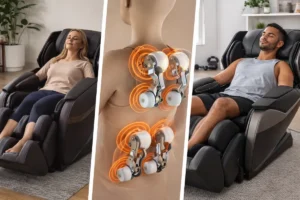
| Body Scanning | Automatically adjusts massage rollers to the user’s height and posture. |
| Heated Massage | Uses heat therapy to relax muscles and improve perceived comfort. |
| Air Compression Massage | Inflatable airbags apply pressure to arms, calves, and feet. |
| Bluetooth Speakers | Lets users listen to music or audio during massage sessions. |
Technology Trends in Massage Chairs
The massage chair industry is evolving with more automation, smarter software, and more premium comfort engineering.
Key innovations shaping the next generation of massage chairs include AI-powered body detection, longer SL-track systems, voice control, smartphone app integration, and quieter motors.