How to Use a Massage Gun Safely (Beginner Guide & Tips)

Using a massage gun is a popular way to relieve muscle tension, boost circulation and support faster muscle recovery, but only when it’s used correctly. For beginners, improper technique, too much pressure or using a massage gun on the wrong areas can lead to soreness, bruising or irritation instead of relief.
If you’ve recently bought your first massage gun or you’re still deciding which model to choose, our guide to the best massage guns is a great place to start. Once you have the right device, understanding massage gun safety becomes essential. These tools deliver rapid percussion therapy, and knowing how long to use a massage gun, which muscles are safe to treat, and when to avoid certain areas can make a big difference in both comfort and results.
In this beginner guide, we’ll cover how to use a massage gun safely, recommended session lengths, common mistakes to avoid and simple tips for building a safe and effective recovery routine. This approach helps you get the most out of your massage gun while minimizing the risk of discomfort or injury.
How to Use a Massage Gun Safely?
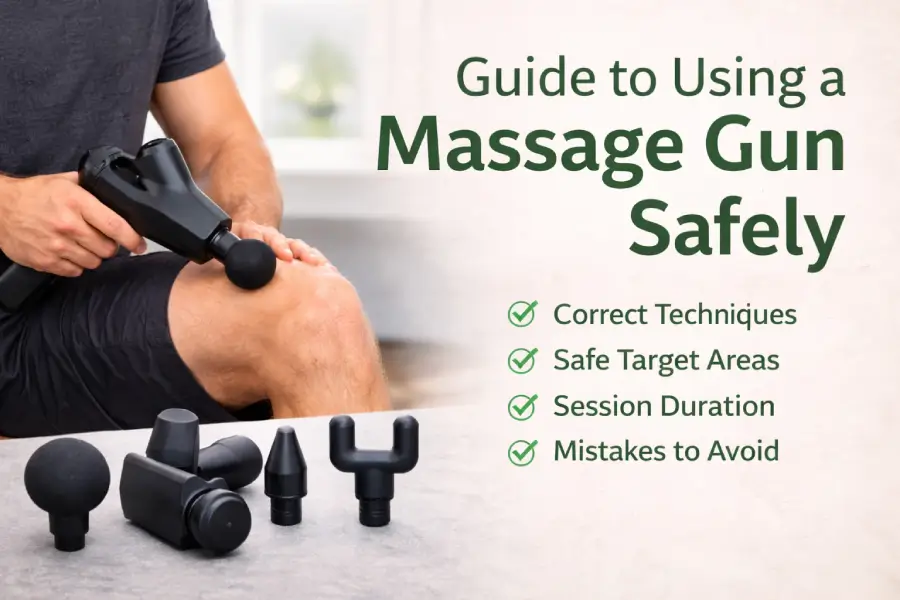
Using a massage gun safely is less about power and more about technique, timing, and control. When used correctly, a massage gun can help relax tight muscles and support recovery. When used incorrectly, it can cause soreness, bruising, or irritation.
Follow these safety guidelines to get the benefits without the downsides:
1. Start on the Lowest Speed Setting
Always begin on the lowest speed and lightest pressure, especially if you’re new to percussion therapy. Higher speeds don’t mean better results — they simply increase intensity.
2. Let the Massage Gun Do the Work
Avoid pressing the massage gun forcefully into your muscles. Lightly rest the head against the muscle and allow the device’s percussion to work naturally.
3. Keep the Gun Moving
Never hold the massage gun in one spot for too long. Slowly glide it over the muscle, spending about 30–60 seconds per muscle group.
| Guideline | Recommended Practice |
|---|---|
| Time per muscle | 30–60 seconds max |
| Pressure | Light to moderate |
| Movement | Slow, continuous motion |
4. Target Large Muscle Groups First
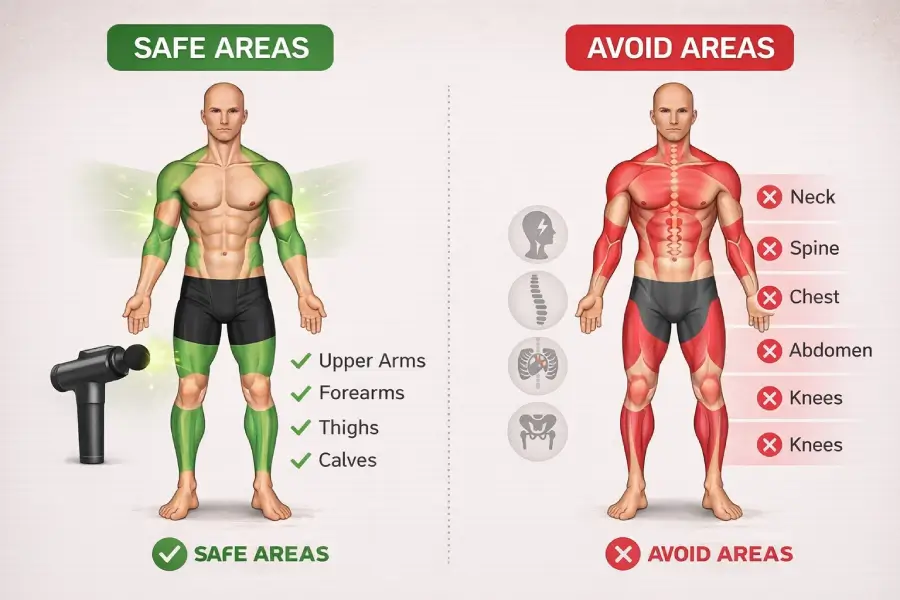
Massage guns are safest and most effective on large, soft muscle areas such as:
- Quads
- Hamstrings
- Glutes
- Calves
- Upper back muscles (avoid the spine)
| Safe Areas | Avoid These Areas |
|---|---|
| Large muscle groups | Spine and joints |
| Soft tissue | Neck front / throat |
| Upper back muscles | Inflamed or injured areas |
5. Breathe and Stay Relaxed
Tensing up during a session reduces the effectiveness of the massage. Breathe normally and relax the muscle you’re working on.
6. Stop If It Feels Painful or Numbing
A massage gun may feel intense, but it should never feel sharp, painful, or numbing. If you experience tingling or lingering soreness, stop or reduce intensity.
Quick safety reminder: Massage guns are designed for muscle tissue only, not joints, bones, or inflamed areas.
How Long Should Each Massage Gun Session Be?
When using a massage gun, duration matters more than intensity. Percussion therapy works best in short, controlled bursts that stimulate muscles without overstressing the tissue. Longer sessions don’t improve results and can increase soreness or irritation.
| Use Case | Recommended Time | Intensity Level | Notes |
|---|---|---|---|
| Warm-up (pre-workout) | 20–30 sec per muscle | Low | Boosts blood flow without over-relaxing muscles |
| Post-workout recovery | 30–60 sec per muscle | Low–Moderate | Focus on large muscle groups; avoid joints and bony areas |
| Daily muscle relief | 1–2 min total | Low–Moderate | Great for general tightness after sitting, work, or light activity |
| Stubborn tight spots | Max 60 sec per area | Moderate | Keep the head moving; don’t press hard or “drill” one point |
| Beginner phase (first 1–2 weeks) | 15–30 sec per muscle | Low | Let your body adapt before increasing time or speed |
Rule of thumb: Avoid more than 60 seconds on the same area. If you feel tender the next day, reduce both time and pressure.
Keep in mind that lower cost models often have fewer speed settings and less power, which is perfectly fine for shorter and beginner friendly sessions. If price is a concern, our breakdown of the best budget massage guns highlights reliable options that still meet basic safety and performance needs.
⚠️ When Not to Use a Massage Gun
You should avoid or limit massage gun use if you have:
- Open cuts, wounds, bruises, or skin irritation
- Recent muscle tears, fractures, or joint injuries
- Nerve conditions, numbness, or reduced sensation
- Blood clotting disorders or a history of deep vein thrombosis (DVT)
- Severe inflammation, swelling, or acute pain
- Recently had surgery (unless cleared by a healthcare professional)
You should also avoid using a massage gun on:
- The spine, neck front, or throat area
- Joints, bones, or bony prominences
- Areas with varicose veins or visible swelling
If anything feels sharp, burning, numbing, or unusually uncomfortable, stop the session immediately and reduce intensity before future use.
Massage Gun Attachments & Safe Target Areas
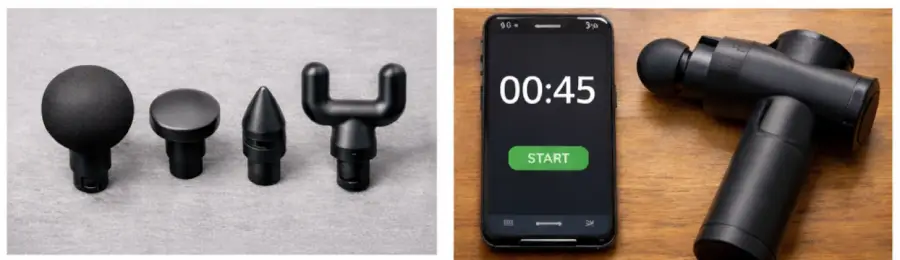
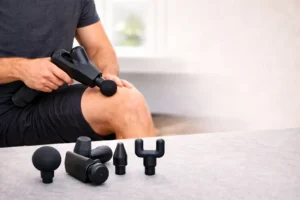
Using the right massage gun attachment is just as important as using the correct speed and pressure. Each attachment is designed for specific muscle groups, and choosing the wrong one can reduce effectiveness or cause discomfort.
Below is a simple guide to the most common massage gun attachments and where they’re safest to use.
| Attachment Type | Best For | Safe Target Areas | Areas to Avoid |
|---|---|---|---|
| Ball Head (Round) | General muscle relief | Quads, glutes, hamstrings, calves, upper back | Spine, neck front, joints |
| Flat Head | Dense muscle groups | Chest, shoulders, upper back muscles | Bony areas, kidneys |
| Bullet / Cone | Trigger points | Targeted muscle knots (brief use) | Neck, spine, joints, tendons |
| Fork / U-Shape | Muscles around the spine | Erector muscles (either side of spine) | Direct spine contact |
| Air Cushion / Soft Head | Sensitive areas | Arms, calves, beginner use | Inflamed or injured areas |
If portability and lighter pressure matter to you, compact devices can be a better choice for daily use, especially for beginners. Our guide to the best mini massage guns covers the most effective small and travel friendly options.
🗓️ How to Build a Safe Weekly Massage Gun Routine
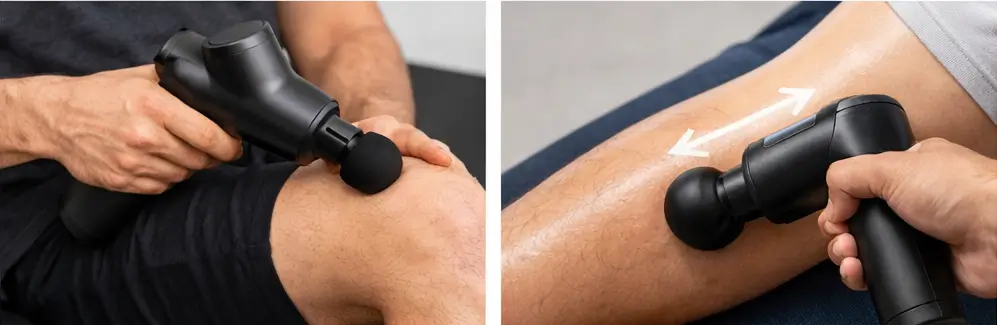
A massage gun works best when used consistently but conservatively. The goal isn’t daily deep treatment on the same muscles, it’s supporting recovery while allowing your body time to adapt and heal.
A balanced weekly routine alternates lighter recovery sessions with slightly more focused use, depending on your activity level and muscle soreness.
Below is a beginner-friendly weekly structure you can adjust over time.
| Day | Session Focus | Recommended Time | Intensity Level | Notes |
|---|---|---|---|---|
| Monday | General muscle recovery | 1–2 min total | Low | Light pass over large muscle groups |
| Tuesday | Targeted tight areas | 30–60 sec per muscle | Low–Moderate | Avoid repeating the same spot too long |
| Wednesday | Active recovery | 1 min total | Low | Focus on circulation, not deep pressure |
| Thursday | Post-workout or high-activity | 30–60 sec per muscle | Moderate | Large muscle groups only |
| Friday | Light relaxation | 1–2 min total | Low | Short session to reduce stiffness |
| Saturday | Optional focused session | Max 60 sec per area | Moderate | Skip if muscles feel sore or tender |
| Sunday | Rest or very light use | 30 sec per muscle (optional) | Very Low | Rest day is often the best recovery |
When to Consider Seeing a Professional Instead
A massage gun can be a helpful tool for everyday muscle recovery, but it’s not a replacement for medical evaluation or hands-on treatment when something more serious is going on. In some cases, continuing to use a massage gun can actually delay proper healing.
You should consider seeing a healthcare professional, physical therapist, or sports therapist if:
- Muscle pain lasts longer than 7–10 days despite rest and massage
- You experience sharp, stabbing, or worsening pain
- Pain is accompanied by swelling, redness, or warmth
- You notice numbness, tingling, or loss of strength
- Pain started after a fall, impact, or sudden injury
- Discomfort interferes with normal movement or daily activities
A professional can help identify whether the issue is muscular, joint related or nerve related and recommend appropriate treatment.
For many people, the best approach is a combination of occasional professional care and responsible at home use of recovery tools like massage guns. Knowing when to stop and seek help is just as important as knowing how to use the device correctly.
FAQ: How to Use a Massage Gun Safely?
1. Is it safe to use a massage gun every day?
Yes, for most people it’s safe to use a massage gun daily as long as sessions are short and low to moderate intensity. Avoid using it on the same muscle group every day and take rest days if muscles feel sore or tender.
2. Can you overuse a massage gun?
Yes. Overuse can lead to muscle soreness, bruising, or irritation. Signs of overuse include lingering tenderness, numbness, or discomfort the next day. If this happens, reduce session time, lower intensity, or skip a day.
3. How long should beginners use a massage gun?
Beginners should start with 15–30 seconds per muscle group on the lowest speed setting. This allows muscles to adapt safely before increasing duration or intensity.
4. Can you use a massage gun on your back or neck?
You can safely use a massage gun on large back muscles (upper back and lower back muscles only), but avoid the spine, neck front, and bony areas. For the neck and shoulders, use low intensity and soft attachments.
5. Should a massage gun hurt when you use it?
No. A massage gun may feel intense or uncomfortable at times, but it should never cause sharp pain, burning, or numbness. Pain is a sign to stop or reduce pressure immediately.
6. Is it better to use a massage gun before or after a workout?
Both can be helpful. Use it before workouts for a brief warm-up and increased circulation, and after workouts to help relax tight muscles and support recovery.
Best Hair Scalp Massagers for Hair Growth: (2026) Top Picks
Best Affordable Massage Chairs: 5 Budget Picks That Feel Premium